Arcanium Studios · Painting Workshop
Pick Your Legend
Two lives. Centuries of stories. Where does history end and legend begin?
Choose a portrait to begin
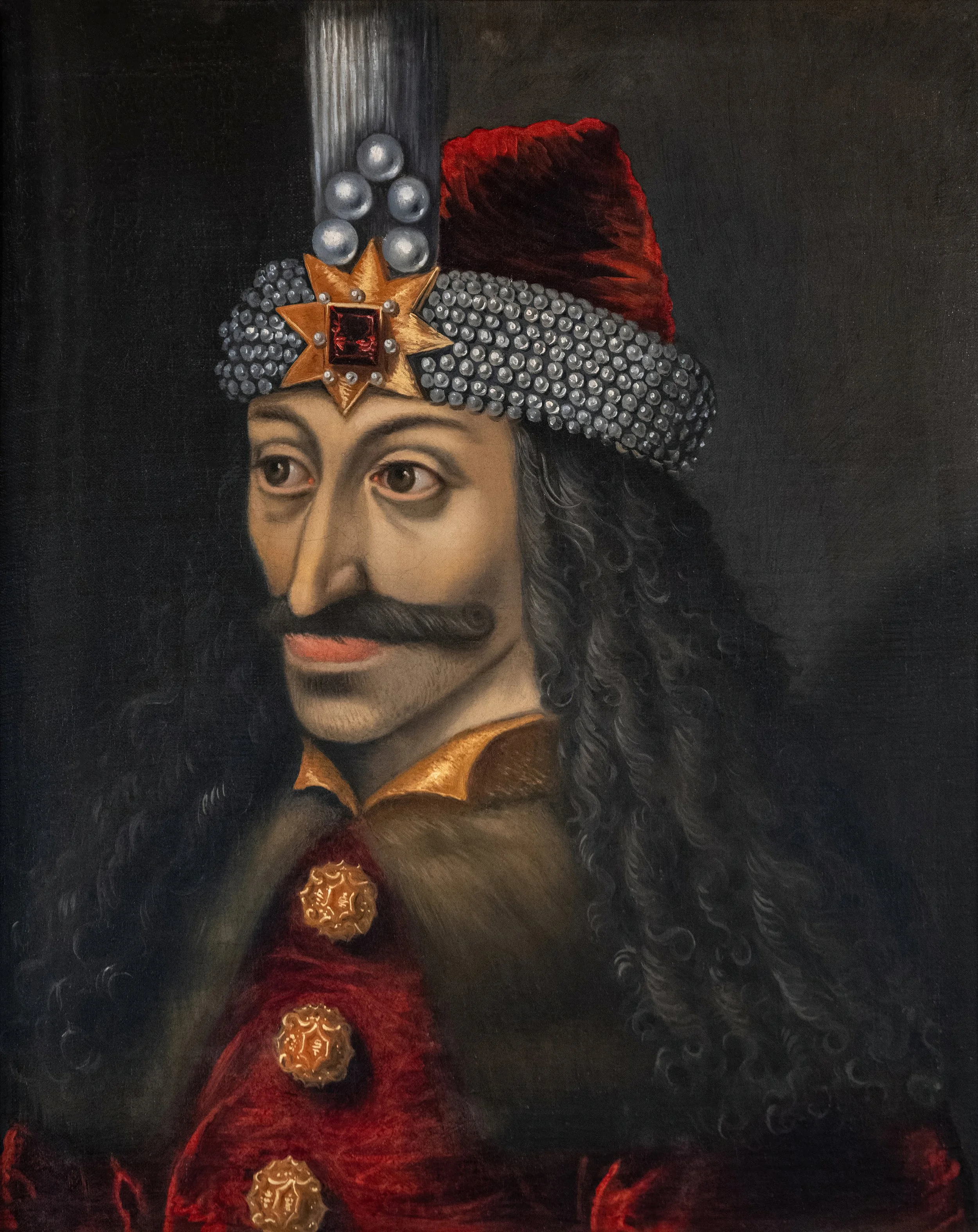
The historical record · Wallachia, c. 1431–1476/77
Dracula
The prince behind the vampire.
Anonymous · second half of the 16th century · oil on canvas
Ambras Castle, Kunsthistorisches Museum, Vienna · Public domain
Long before Bram Stoker introduced the world to Count Dracula, the name belonged to a fifteenth-century ruler of Wallachia, a principality in what is now Romania. He became notorious for brutal methods of punishment, particularly impalement — and the vampire we recognise today emerged centuries after his death.
A son of the dragon
Vlad was born about 1431 into a ruling family whose fortunes depended on shifting alliances. His father, Vlad II Dracul, was associated with the Order of the Dragon, a chivalric order; Dracul carried the dragon, and Drăculea identified the son — Dracula.
So the famous name was not invented for a vampire. As a young man Vlad spent several years at the Ottoman court as a political hostage alongside his brother Radu, while the Wallachian throne was contested by neighbouring powers.
Why did Vlad have so many names?
Vlad III, Vlad Dracula and Vlad Țepeș all describe the same ruler. Dracula links him to his father's name; the Romanian word later acquired associations with the devil, adding another layer. Țepeș, usually translated as "the Impaler", names the method of execution for which he became notorious.
Each name records something different: a place in a dynasty, a reputation, and the way later generations chose to remember him.
A throne worth fighting for
Vlad ruled Wallachia three times: briefly in 1448, from 1456 to 1462, and again in 1476. Wallachia stood between the Kingdom of Hungary and the Ottoman Empire, and its rulers faced pressure from foreign powers as well as rivals at home.
He confronted Ottoman forces and used severe punishment against people he regarded as enemies. In 1462 his conflict with Sultan Mehmed II culminated in an Ottoman invasion; Vlad lost control of Wallachia and spent years in Hungarian custody before regaining the throne briefly in 1476. He was killed within weeks, in the winter of 1476–77.
Was Vlad a hero or a tyrant?
Historical memory depends partly on whose accounts survive. His resistance to Ottoman expansion became central to his reputation in Romanian tradition; accounts associated with his enemies and rivals emphasised cruelty.
Neither perspective makes the violence disappear. The useful question is which specific events can be supported, and how the political interests of the people describing them shaped the description.
The reputation of the impaler
Vlad's association with impalement is not a later invention. Contemporary evidence links him to executions, including collective impalements, and accounts from his lifetime and shortly after describe punishments intended to terrorise opponents. But the numbers require scrutiny.
In early 1459 Vlad arrested merchants from Brașov and Burzenland in Wallachia and had forty-one of them impaled. The figure survives because Dan III — his rival, then in exile — wrote it down in a letter. Later German accounts of the same episode give figures in the hundreds. The violence was real; the arithmetic was not stable.
The forest of the impaled
One of the most famous accounts describes a field of impaled victims seen by Ottoman forces near Târgoviște in 1462. Enveri, an Ottoman chronicler who marched with that campaign, describes seeing the field himself — and gives no number.
The figure of 20,000 comes from Laonikos Chalkokondyles, a Byzantine writer working at a distance, and from him it passed into later chronicles. A 2025 reassessment estimates the true figure at roughly 1,600–1,700, with just over 2,000 impaled across Vlad's whole career.
The distinction matters. Correcting exaggerated numbers does not excuse the killings, but historical investigation should not repeat sensational figures simply because they have become famous. Nor was impalement a routine instrument of mass killing — it was a display, used sparingly and for effect.
From prince to vampire
The historical Vlad died in the fifteenth century. Count Dracula arrived in literature in 1897. Bram Stoker encountered the name while researching the novel, including William Wilkinson's 1820 account of Wallachia and Moldavia, whose footnote glossed Dracula as "in the Wallachian language means Devil".
The name proved memorable. But the surviving evidence does not establish that Stoker built his vampire's personality or history around Vlad III. The Count belongs to a much broader tradition of Gothic fiction and vampire folklore; the prince and the Count became intertwined later, in tourism, film and retelling.
Did Vlad drink blood?
There is no credible historical evidence that Vlad III drank blood as a supernatural practice, or that he was regarded as a literal vampire during his lifetime. Stories associating him with bloodshed, cruelty and gruesome dining scenes circulated, but these should not be confused with documented blood-drinking.
The blood-drinking Count belongs to fiction.
They share a name, not a life
Vlad III left a record of warfare, political conflict and extreme violence. Count Dracula became something else: an enduring figure of horror, seduction, immortality and imagination.
The question is not whether Vlad was a vampire. It is how a historical ruler became inseparable from one.
- c. 1431Born, probably at Sighișoara
- 1442–48Held at the Ottoman court with his brother Radu
- 1448First, brief period of rule
- 1456–62His principal reign
- 1462War with Mehmed II; loses Wallachia
- 1462–75Held by Matthias Corvinus in Hungary
- 1476–77Regains the throne, is killed within weeks
- 1897Stoker publishes Dracula
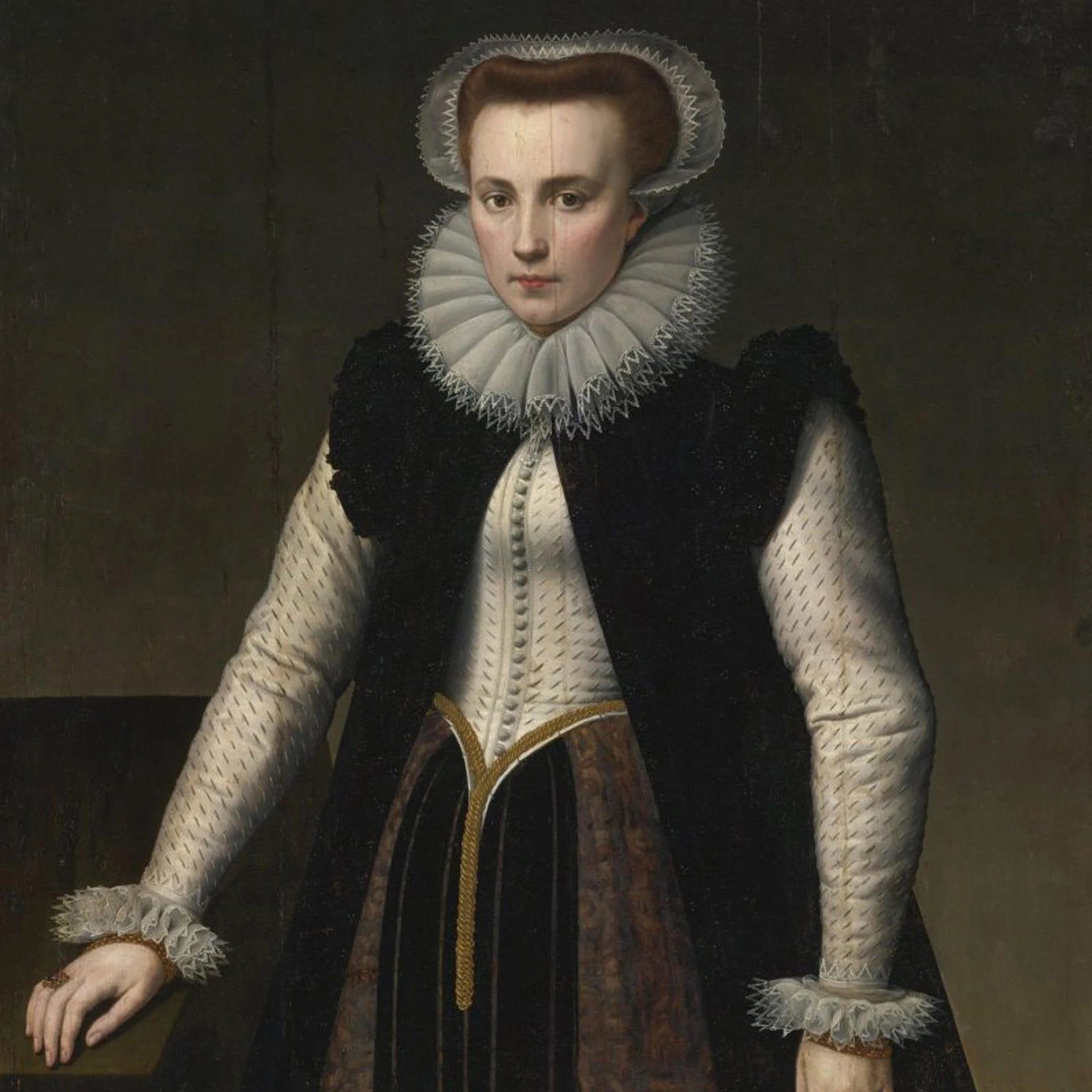
The historical record · Royal Hungary, 1560–1614
Erzsébet Báthory
The woman behind the Blood Countess.
Unidentified painter · c. 1630 · oil on canvas
Traditional identification, not a life portrait · Public domain
Erzsébet Báthory is remembered as the Blood Countess: a noblewoman said to have tortured and murdered hundreds of young women and bathed in their blood to preserve her youth. The surviving record tells a more complicated story of aristocratic power, disputed testimony, and an investigation that never produced a completed trial against her.
Born into power
She was born in 1560 at Nyírbátor, into one of the great families of the Kingdom of Hungary. In 1575 she married Ferenc Nádasdy, a wealthy nobleman and military commander; the match connected two influential families and placed her at the centre of an extensive network of estates and political relationships.
While her husband was occupied with military affairs she took part in estate administration. After his death in January 1604 she managed the Nádasdy estates on behalf of their son Pál, then six or seven, and carried out the Vas county chief-ispán's duties in his name. She was not an isolated figure in a distant castle.
The countess and her castles
Her life extended across several residences: Sárvár, Léka, Sopronkeresztúr and Čachtice — Csejte in Hungarian, now in Slovakia. Čachtice became the setting most closely associated with the legend, but reducing her life to one ominous castle overlooks decades of family responsibility and political activity.
Rumours become accusations
By the early seventeenth century, disturbing reports were circulating about the treatment and deaths of young women associated with her households. In March 1610 the Palatine of Hungary, György Thurzó, ordered an investigation. Witnesses were questioned across several districts between March 1610 and July 1611.
Three hundred and seventeen witnesses were examined. That number sounds overwhelming until each statement is weighed: the archive's own summary is that most witnesses knew only by hearsay, and that those reporting concrete facts could say no more than that deaths had occurred and that some servants had been punished.
The numbers also grew as the investigation travelled. Local witnesses initially described one or two punished servants; several hundred dead girls appear only after news of the Transdanubian depositions reached the Čachtice region.
What did the witnesses actually know?
Some reported direct knowledge of injuries or deaths. Many repeated what they had heard. Others described mistreatment without establishing that Báthory personally committed murder.
The investigation was real and the allegations were real, but their reliability has to be considered statement by statement rather than treating the collection as a single verified account.
An investigation without her trial
On 29 December 1610 Thurzó's men arrived at Čachtice and took her into custody. Members of her household were interrogated; servants accused of involvement were tried at Bytča and executed within days in January 1611. Some confessions were obtained under torture, which raises obvious questions about their reliability.
Báthory herself was never tried. King Matthias II repeatedly instructed Thurzó to bring the case to court; Thurzó delayed until she died. She remained confined at Čachtice until 21 August 1614, and was buried there — her grave has since been lost.
The absence of a trial does not establish her innocence. Equally, accusations and the punishment of servants cannot substitute for a judicial finding against her.
Was she framed?
Historians have explored whether property interests, family rivalries, religious tension or political calculation influenced her downfall. These are legitimate questions: the Palatine stood to gain, and the estate clerks who assembled the case had their own positions.
But no explanation has been demonstrated, and the surviving evidence does not support the claim that the accusations were fabricated wholesale. The archive is explicit that the motives behind the case have not been established. Her case remains contested, not solved.
The blood that appeared later
The most famous part of the story is also the least secure. Bathing in the blood of young women to preserve beauty and youth appears nowhere in the surviving early testimony.
It became prominent in 1729, in a survey of Hungary by the Jesuit László Thuróczi, more than a century after her death. He tells of a servant pulling her hair while combing it, a slap, blood falling on her hand, and skin that seemed to renew itself. Later writers developed the imagery into the Gothic narrative we know.
Did she really kill 650 people?
The figure appears in the accusations, but not as a verified count. It came from a single witness — a peasant girl — at the point in the investigation when the rumour of hundreds was already in circulation. It is testimony, not a register of identified deaths.
Scholars working from the same records have written of "several dozen" deaths. A serious number, and far below the legend. The 650 has acquired authority through repetition rather than evidence.
What survives beneath the story
Erzsébet Báthory was a real noblewoman who became the subject of serious accusations and an extraordinary investigation. The Blood Countess is a later construction, built from those accusations and generations of embellishment.
Not every historical question about her actions can be resolved. What can be done is to distinguish the records from the stories that grew around them.
- 1560Born at Nyírbátor
- 1575Marries Ferenc Nádasdy at Varannó
- 1604Nádasdy dies; she runs the estates
- 1610, MarchThurzó orders an investigation
- 1610, 29 DecTaken into custody at Čachtice
- 1611, JanServants tried and executed at Bytča
- 1614, 21 AugDies in confinement
- 1729Thuróczi publishes the blood-bathing account
The workshop · Arcanium Studios
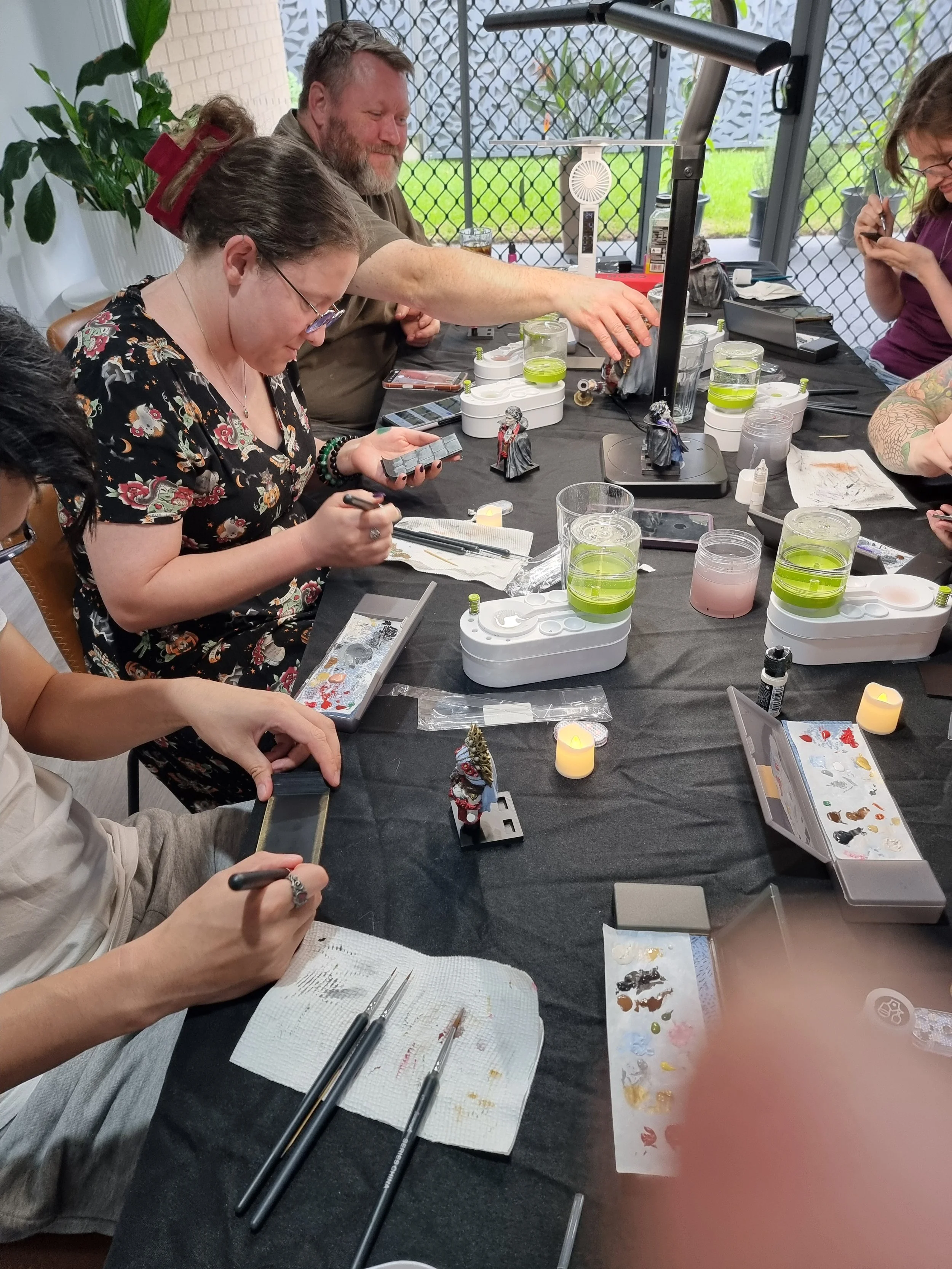
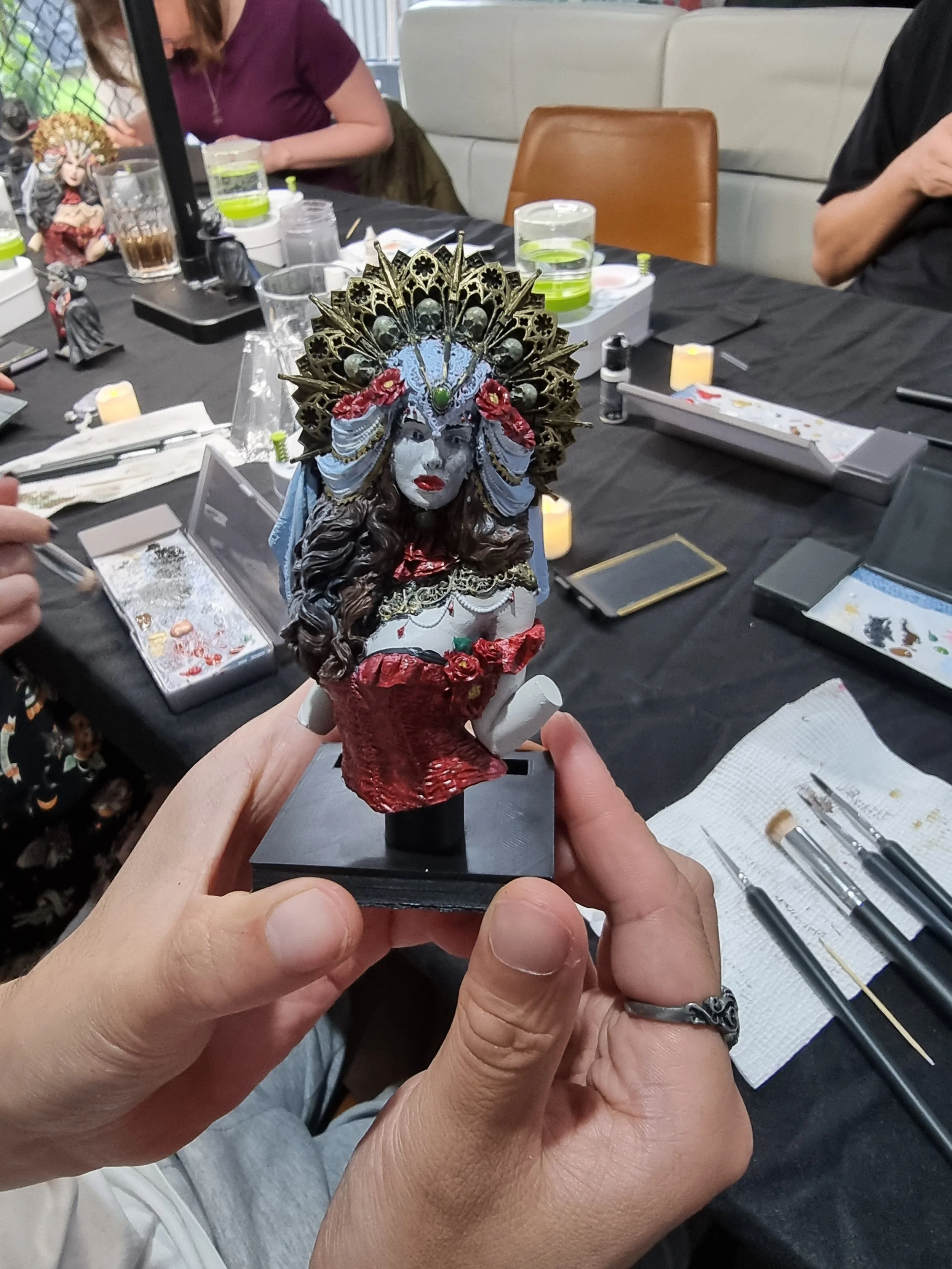
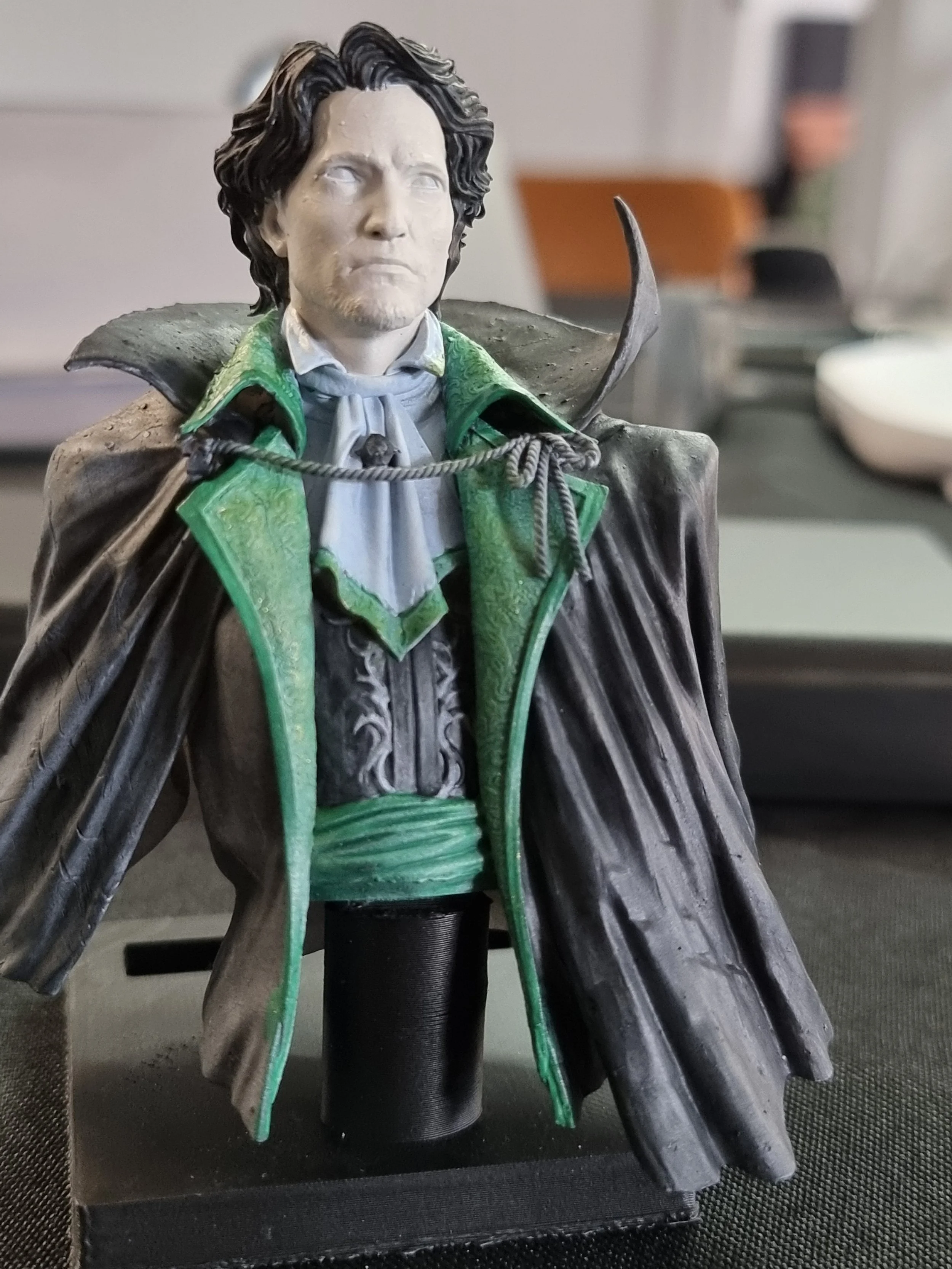
About the Class
Five stages of painting. Five layers of history.
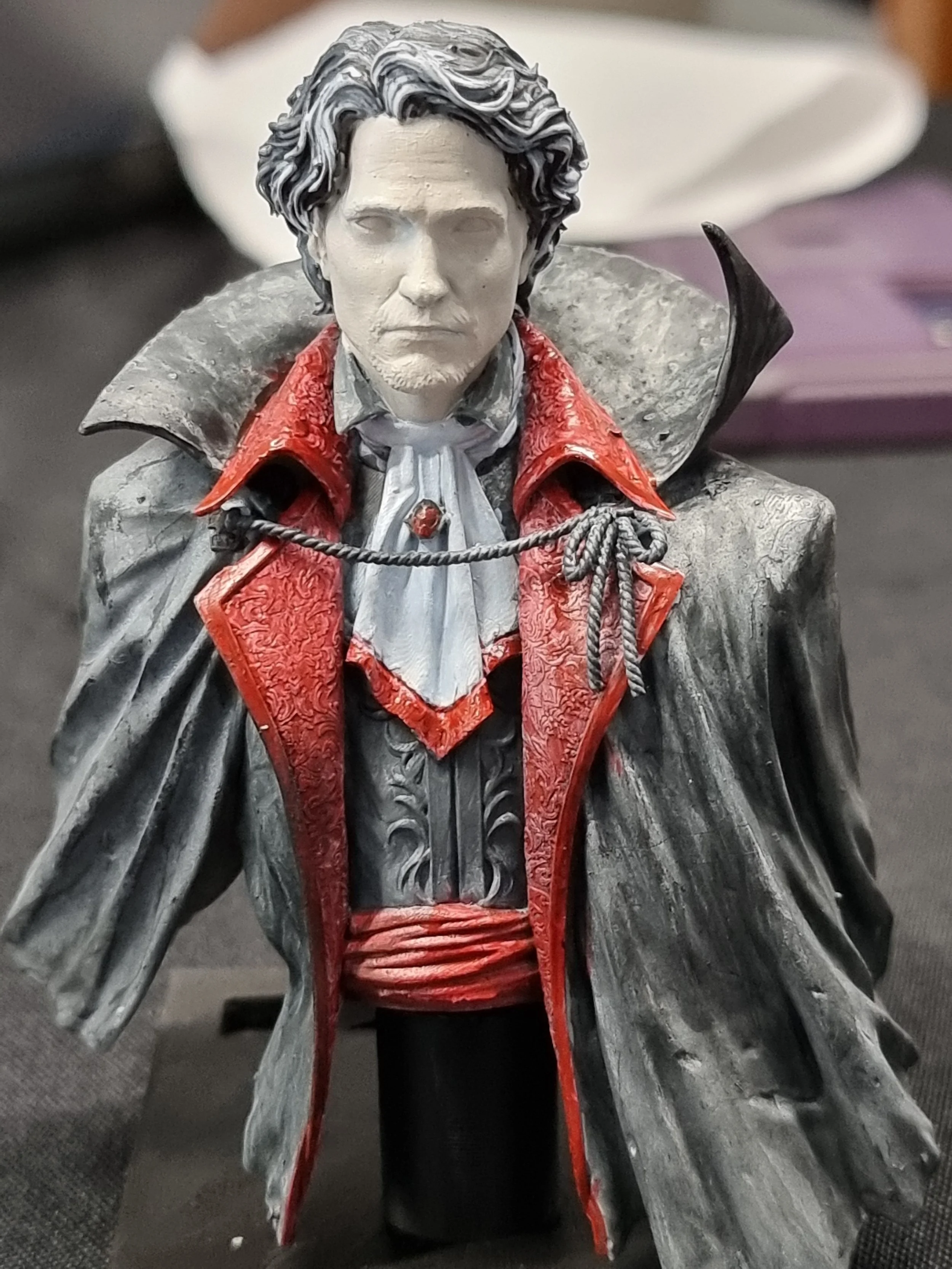
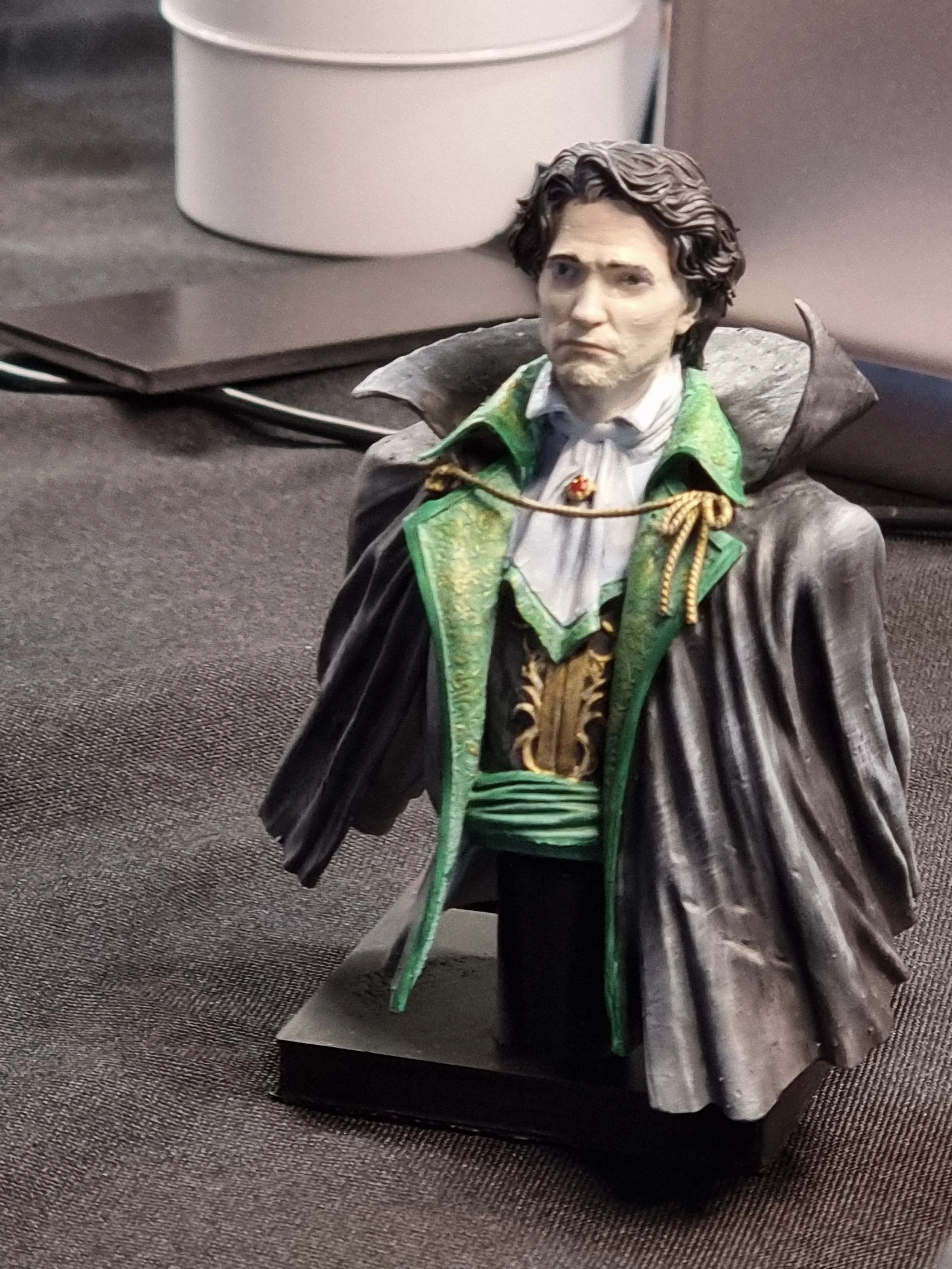
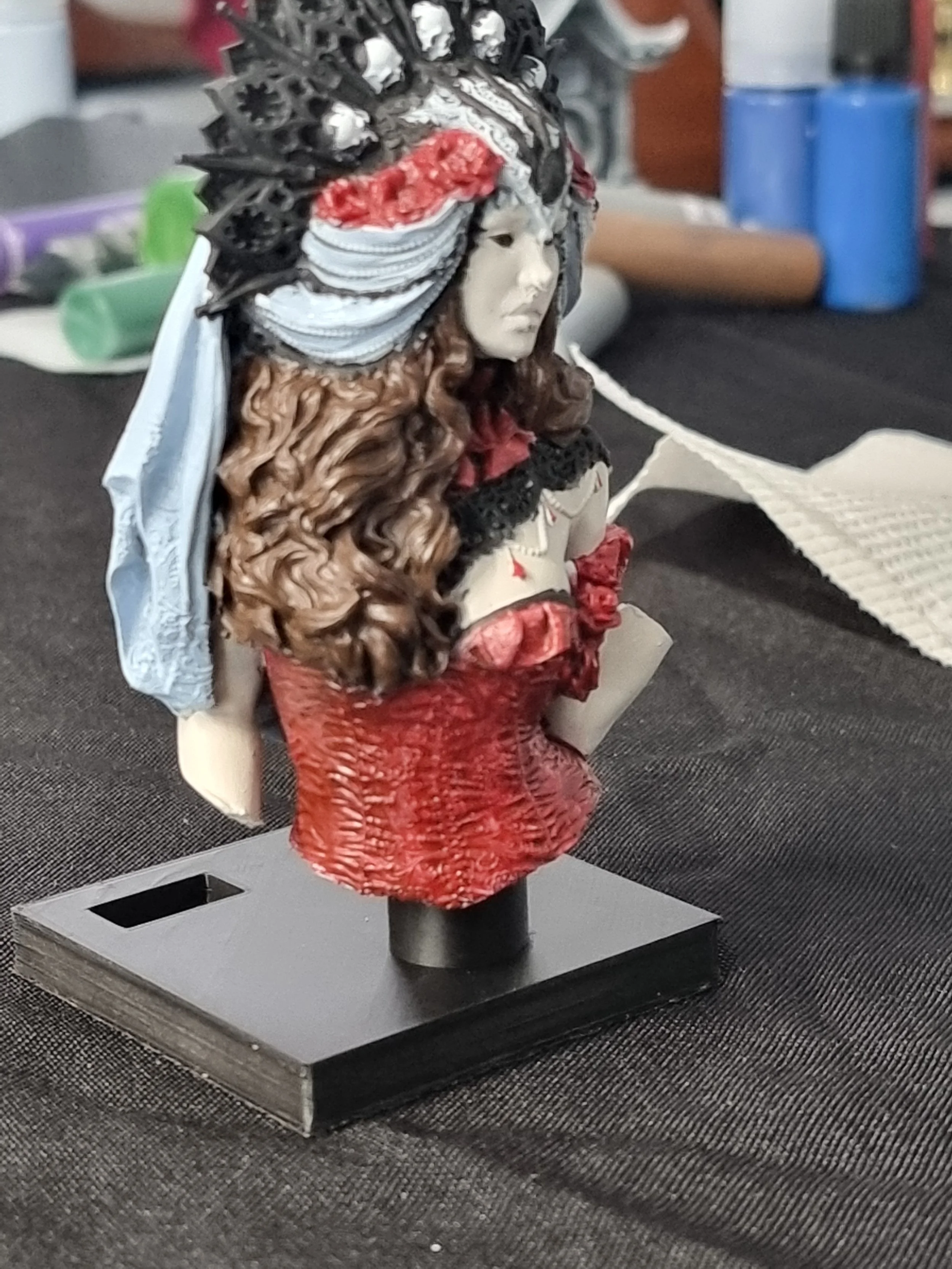
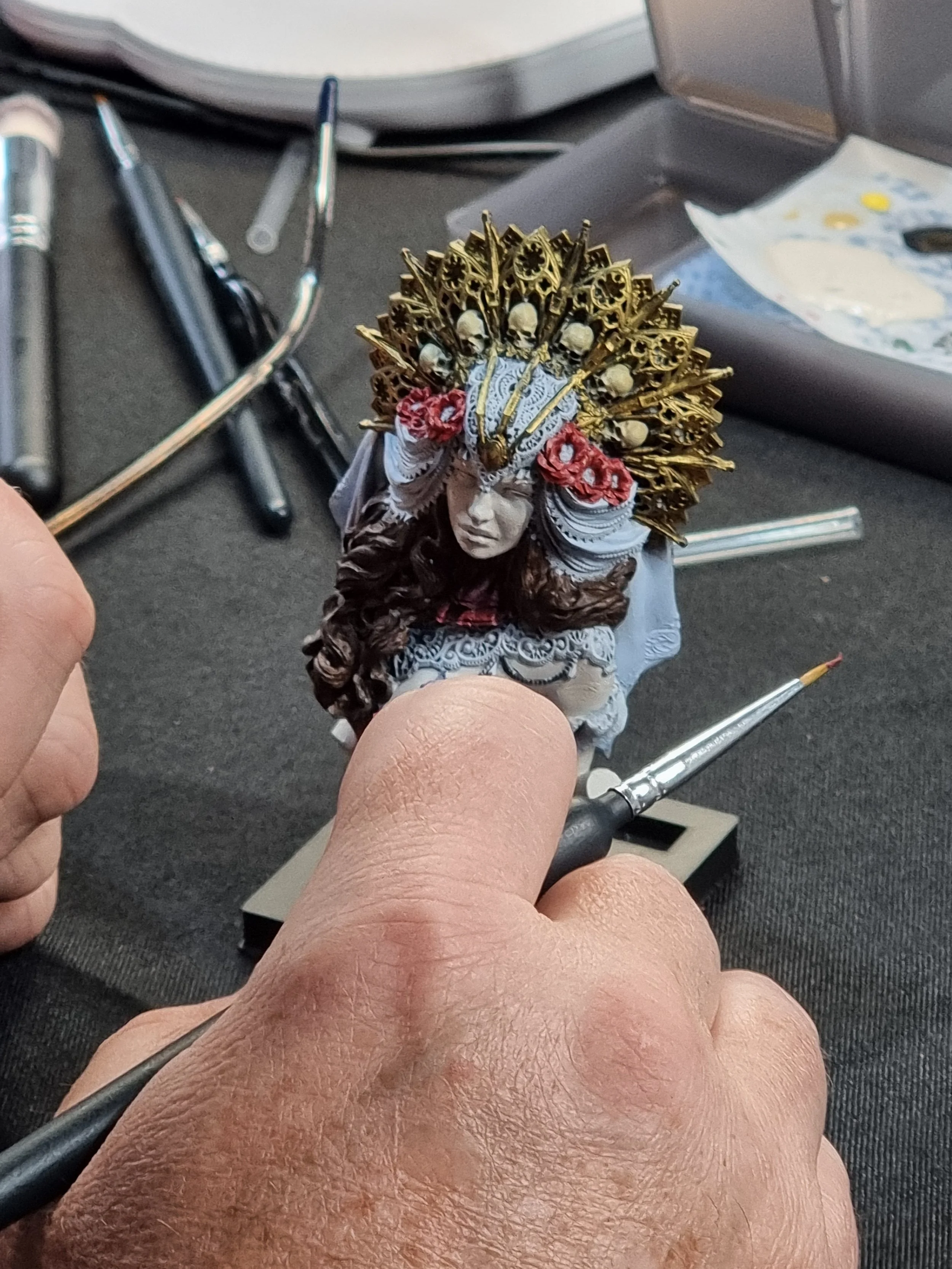
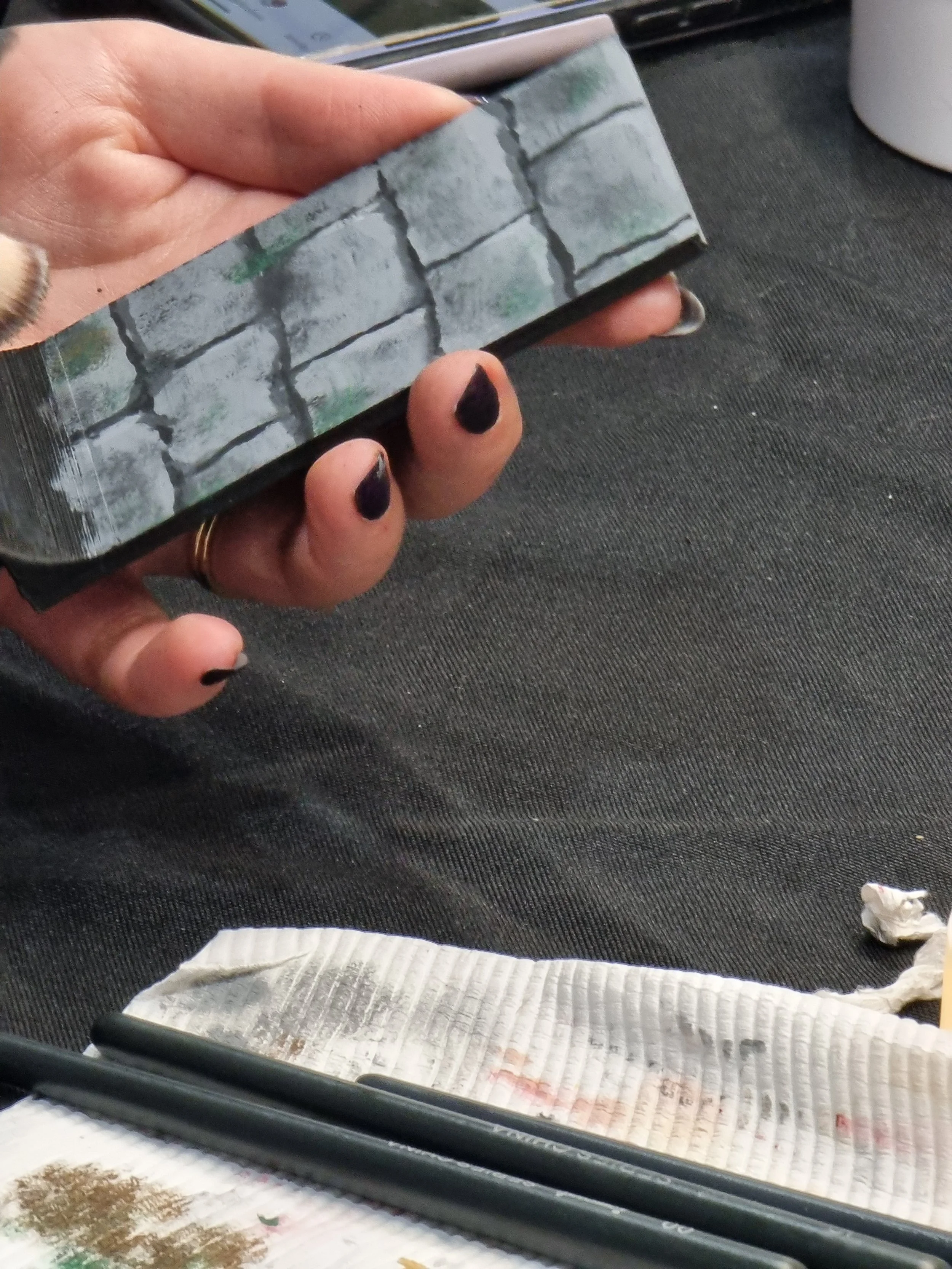
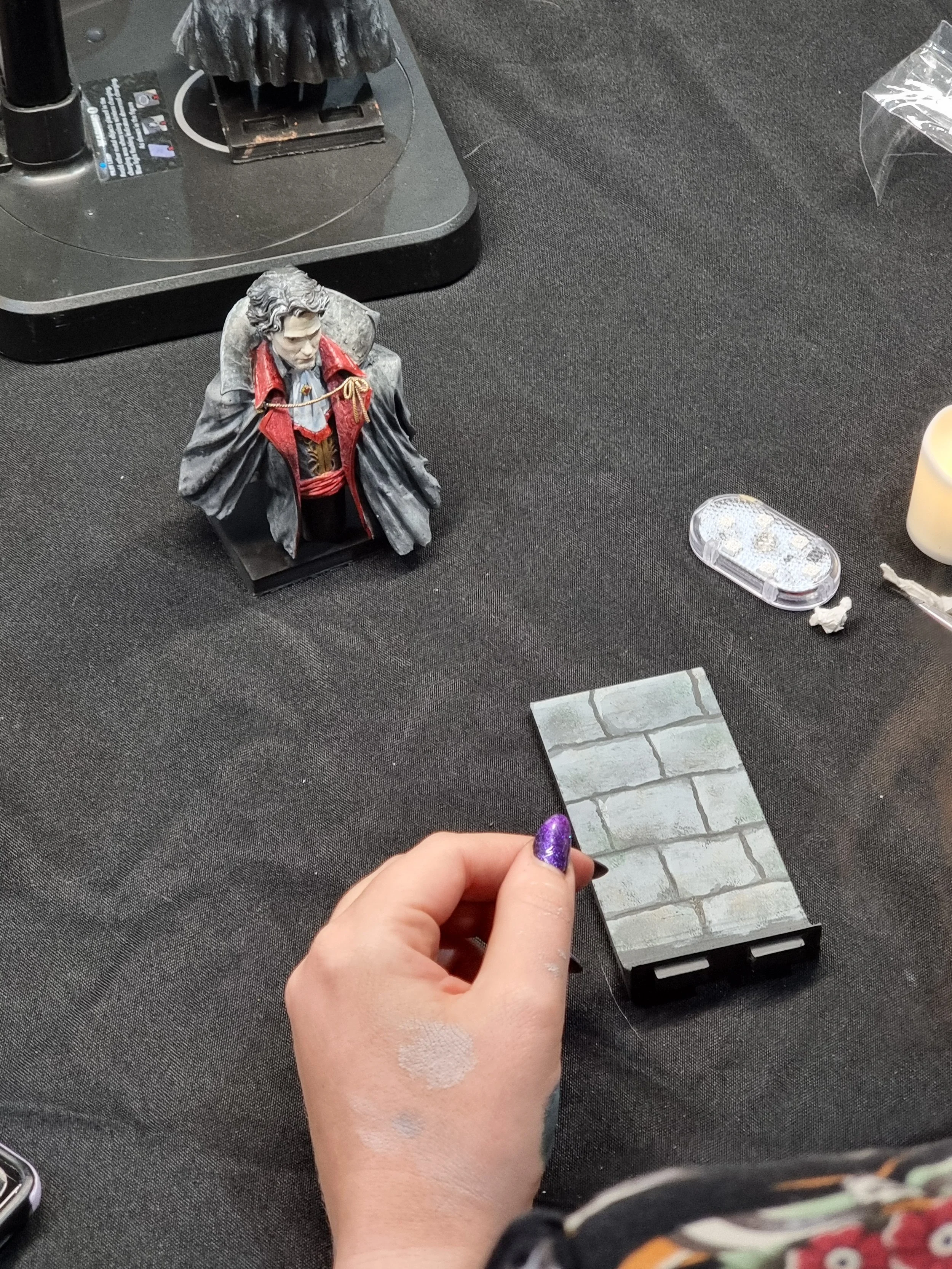
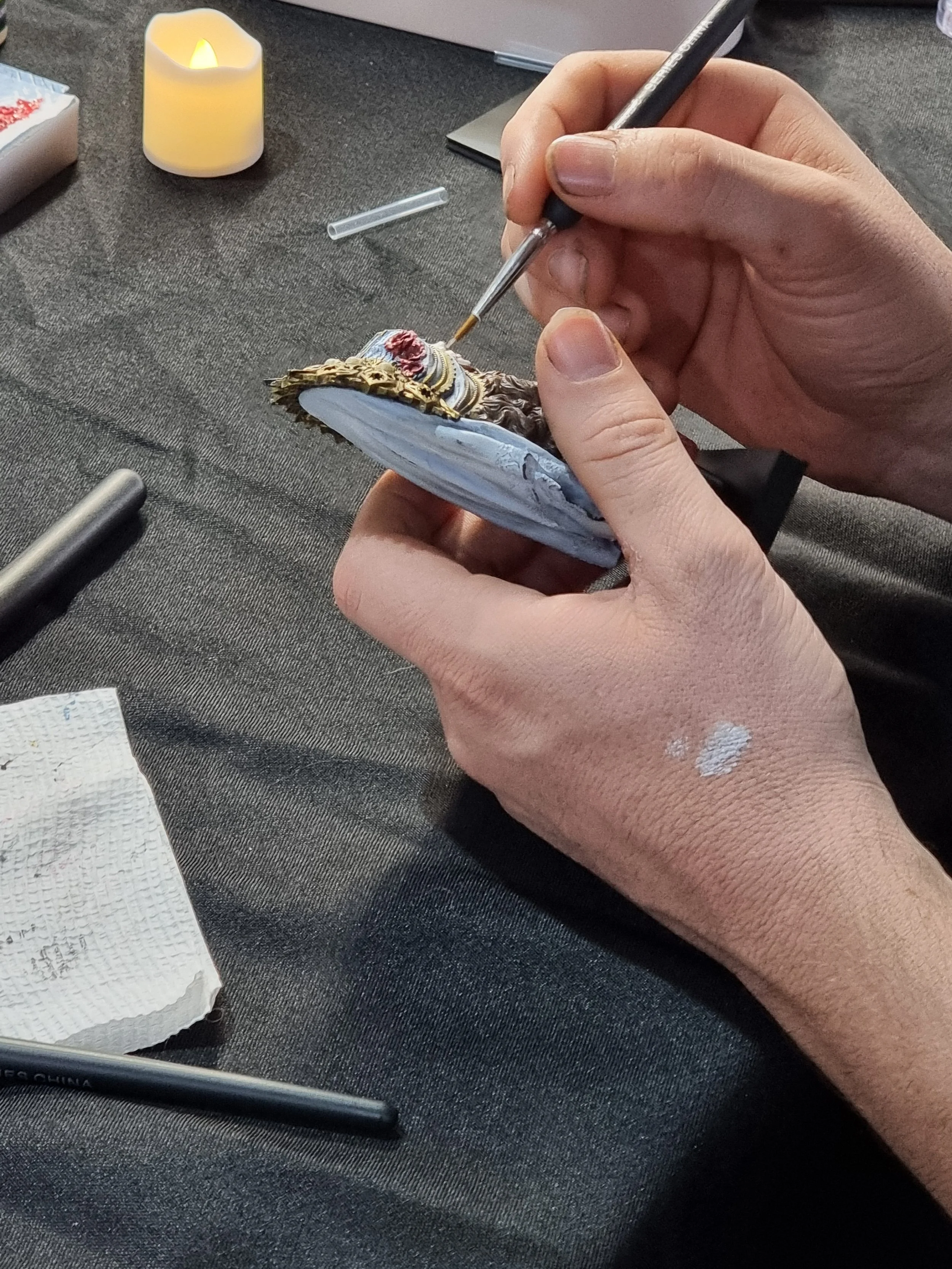
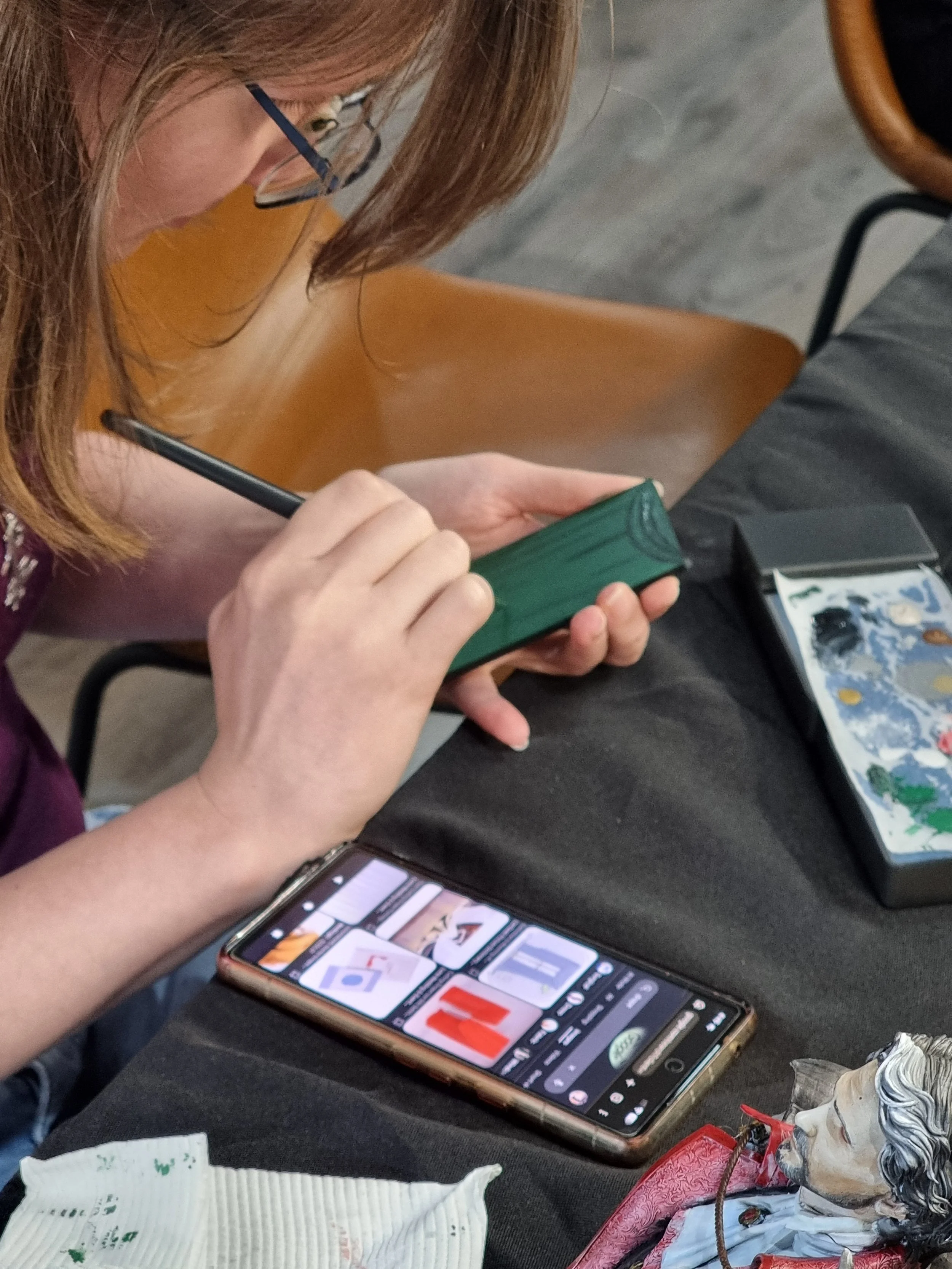
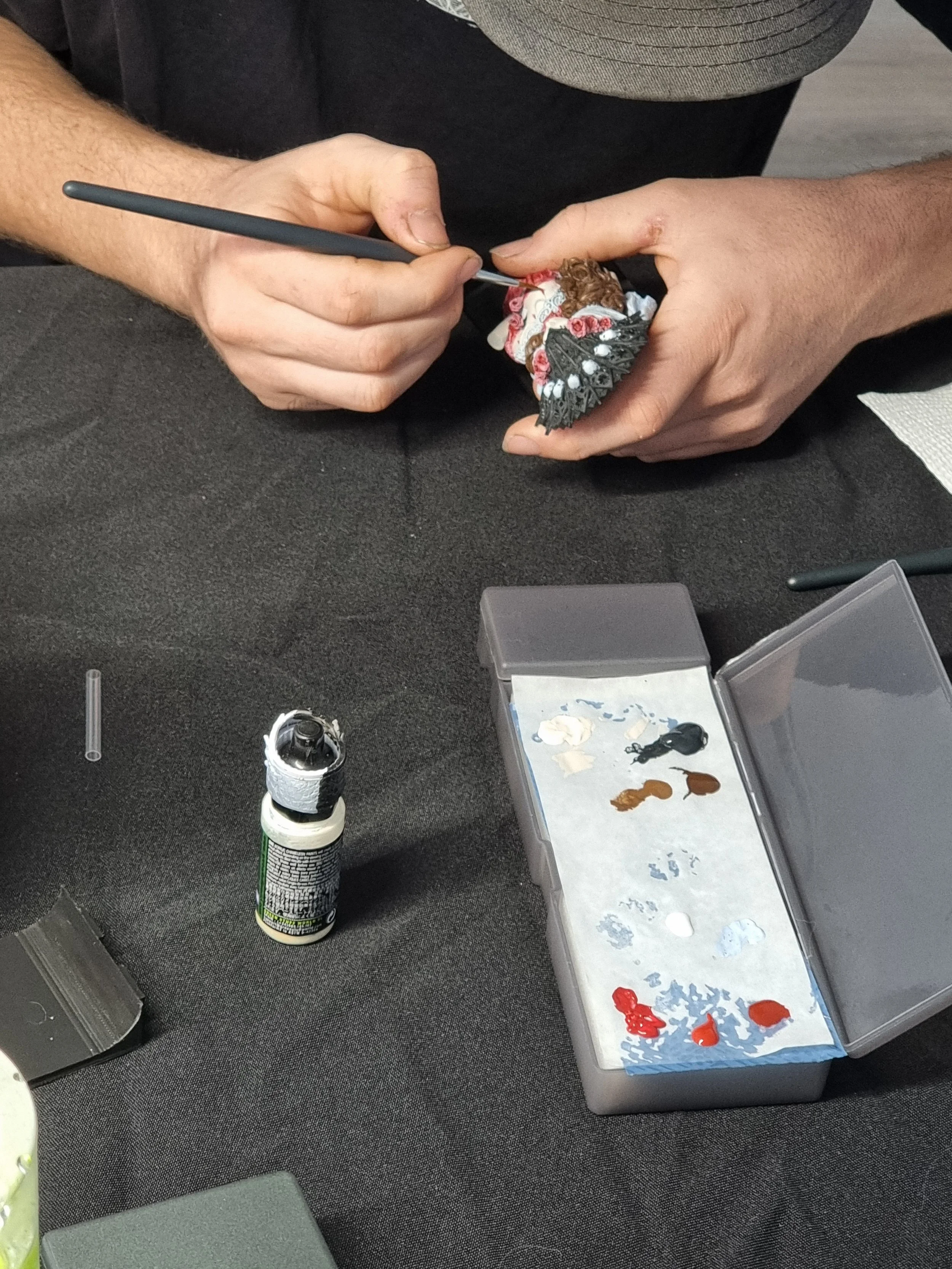
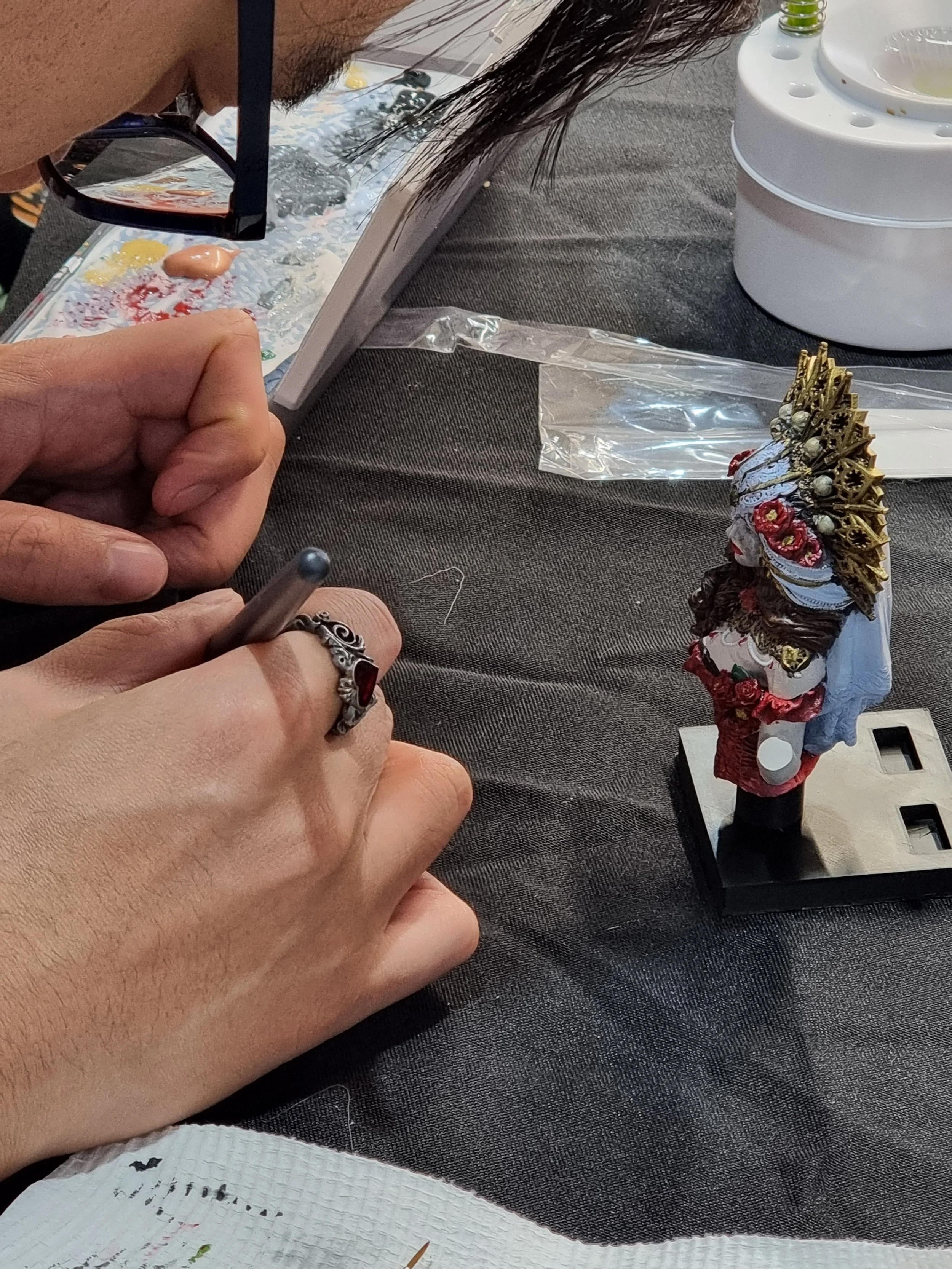
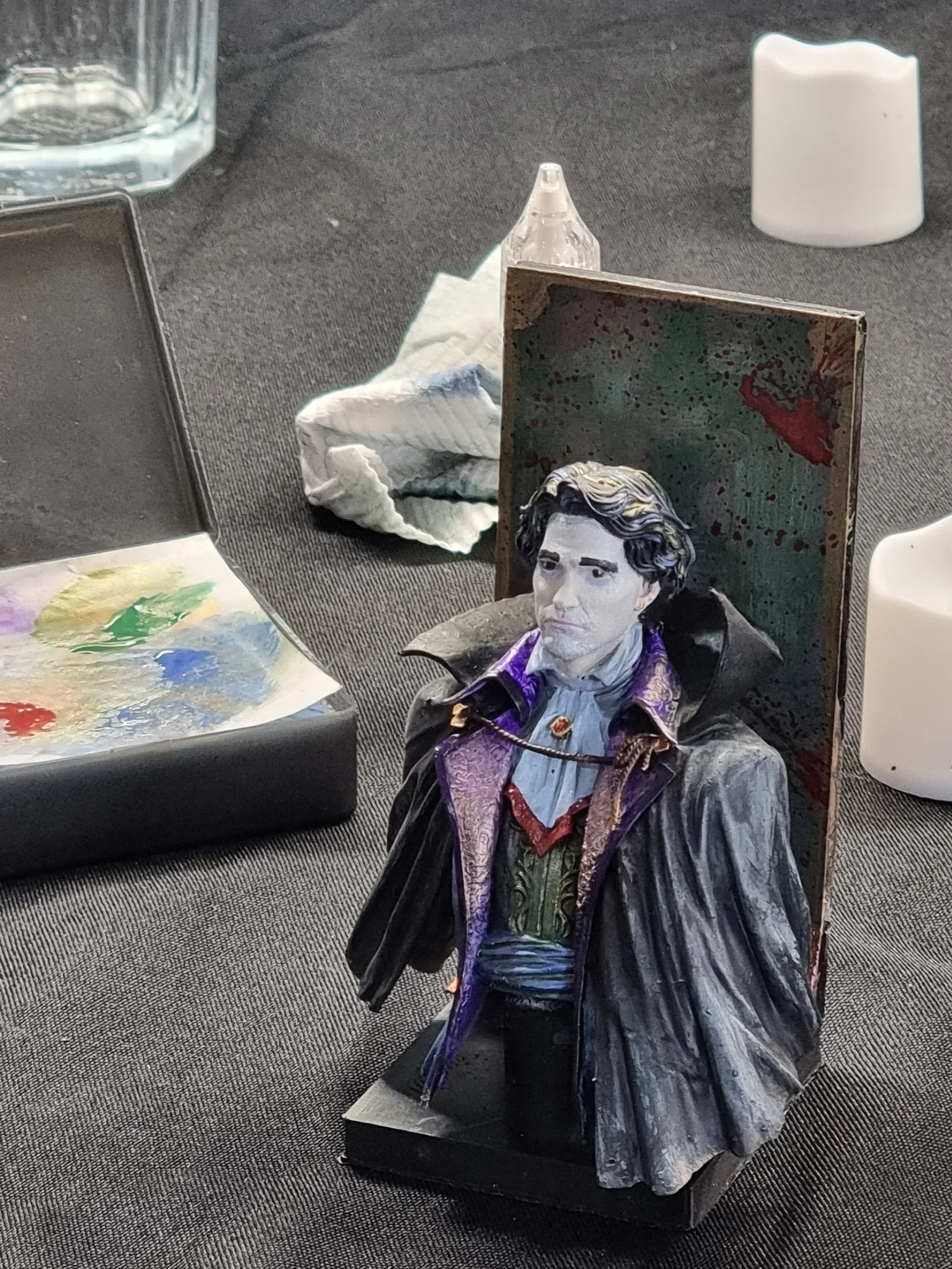
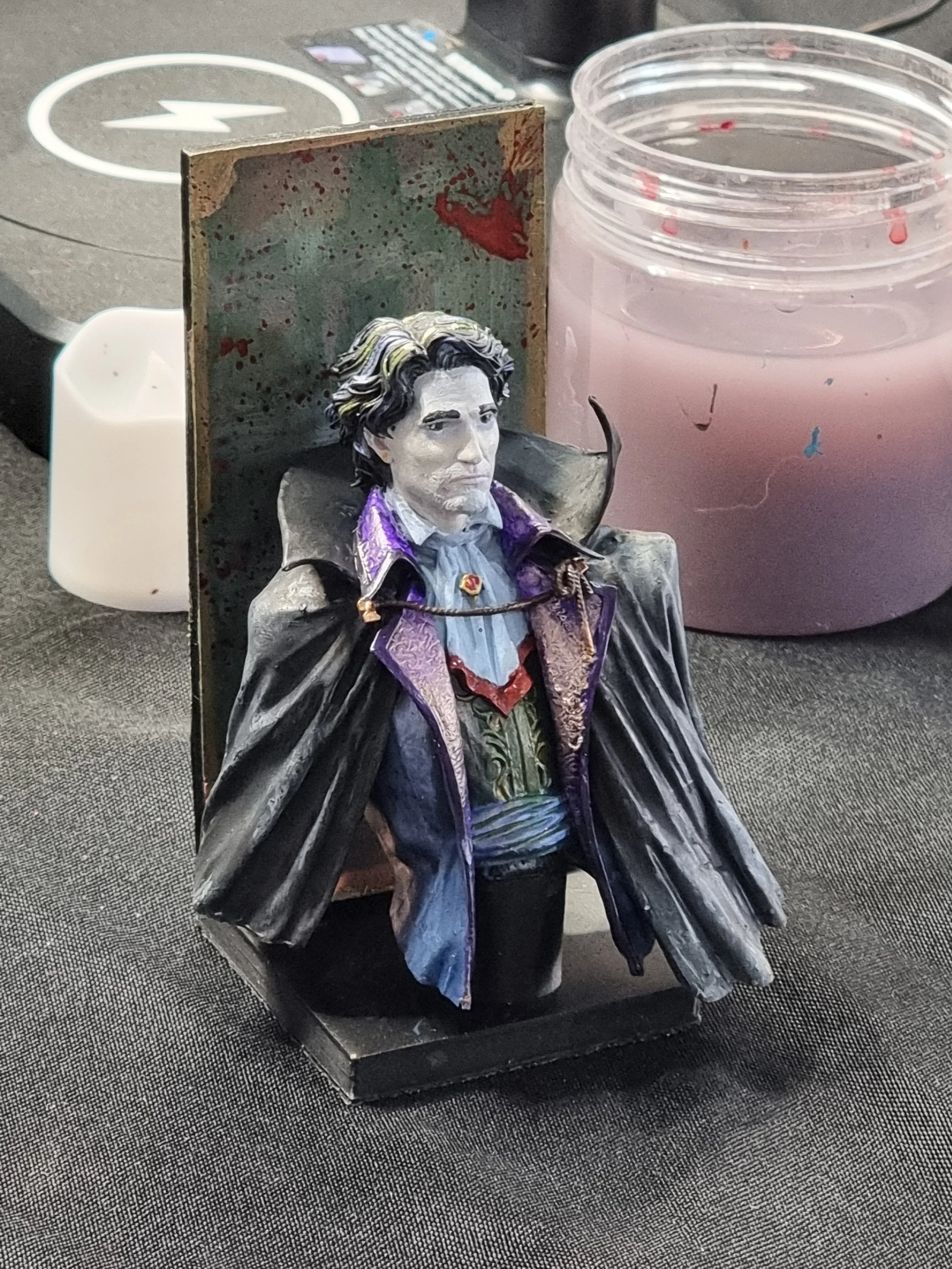
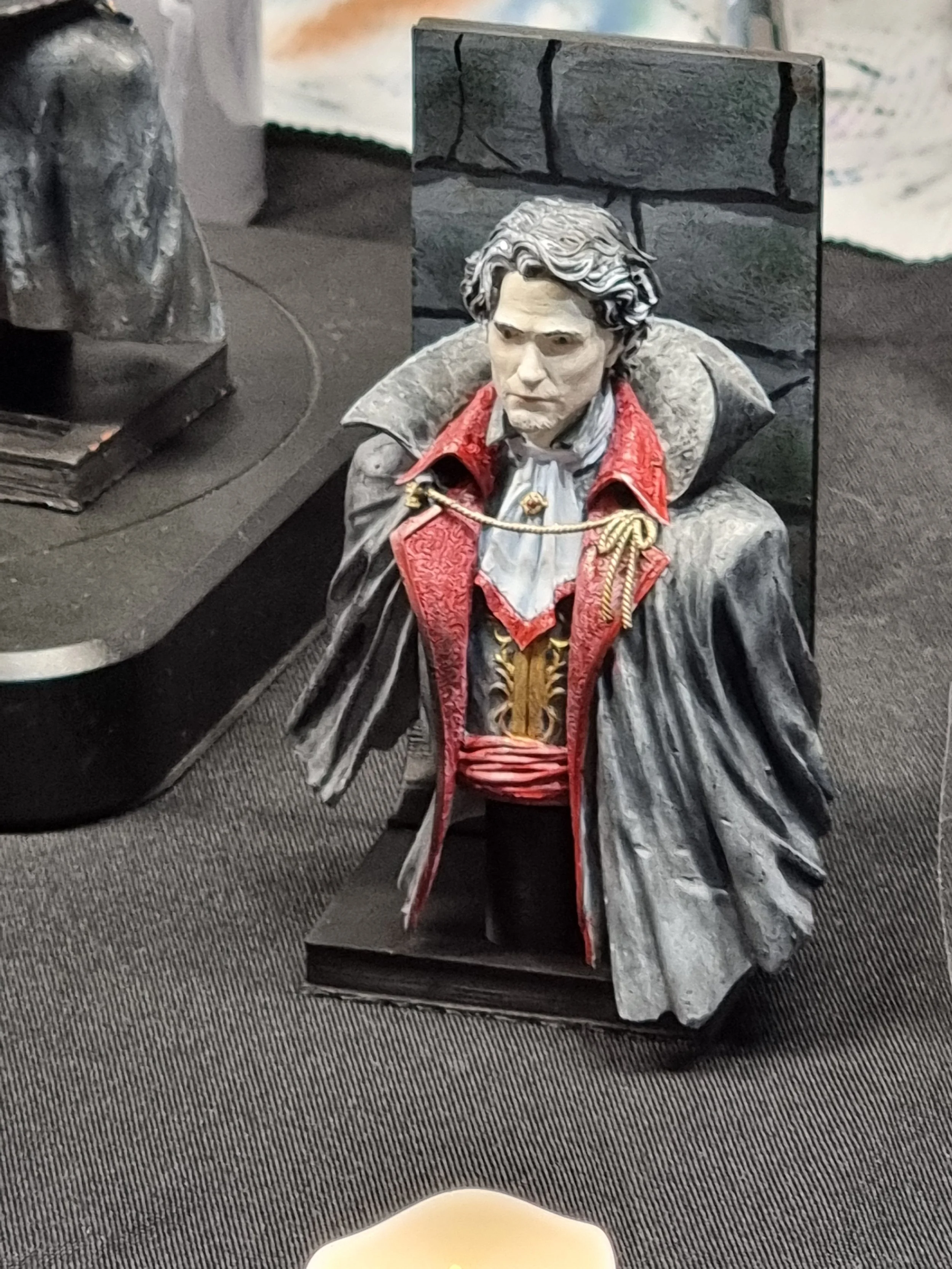
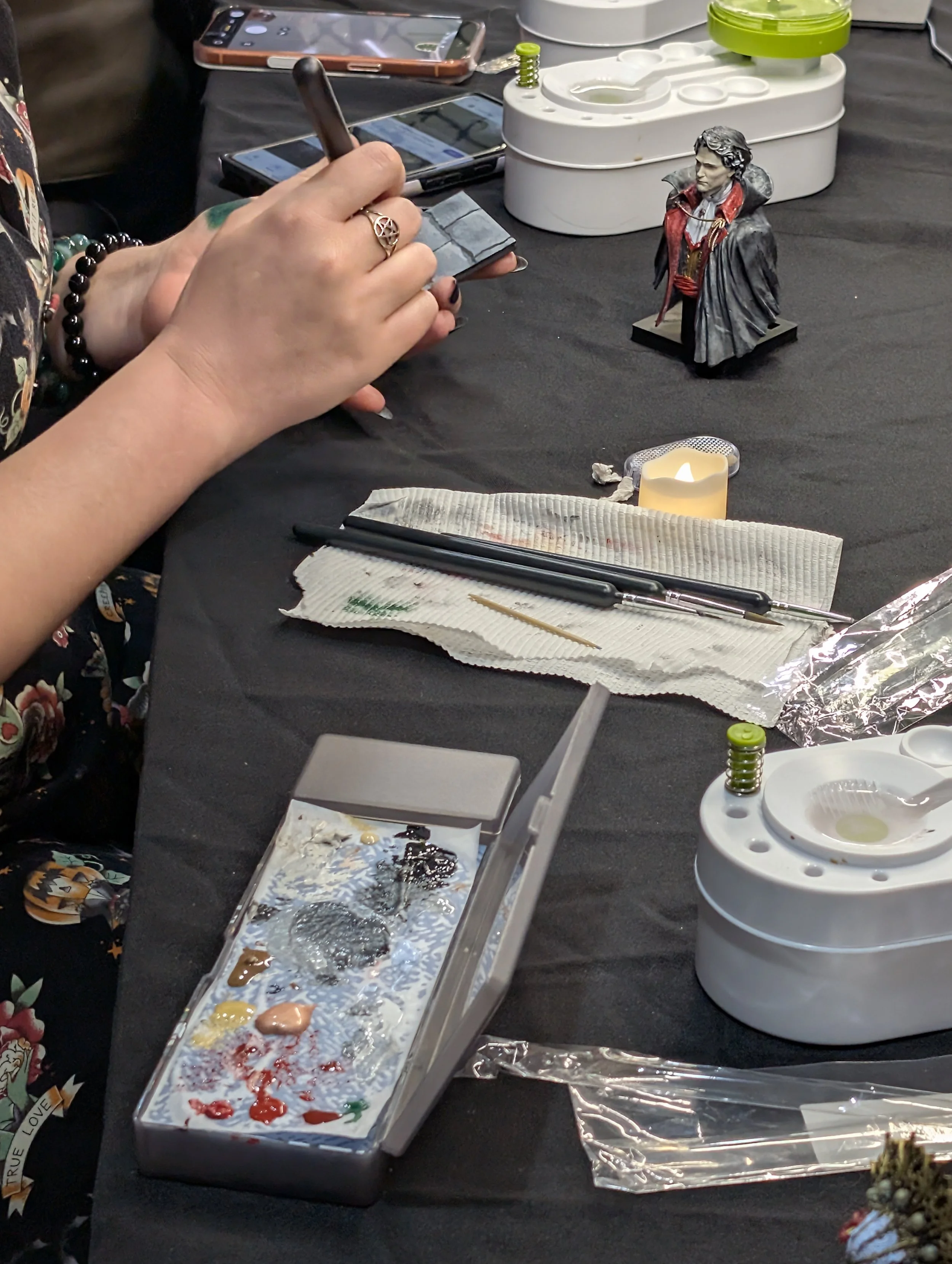
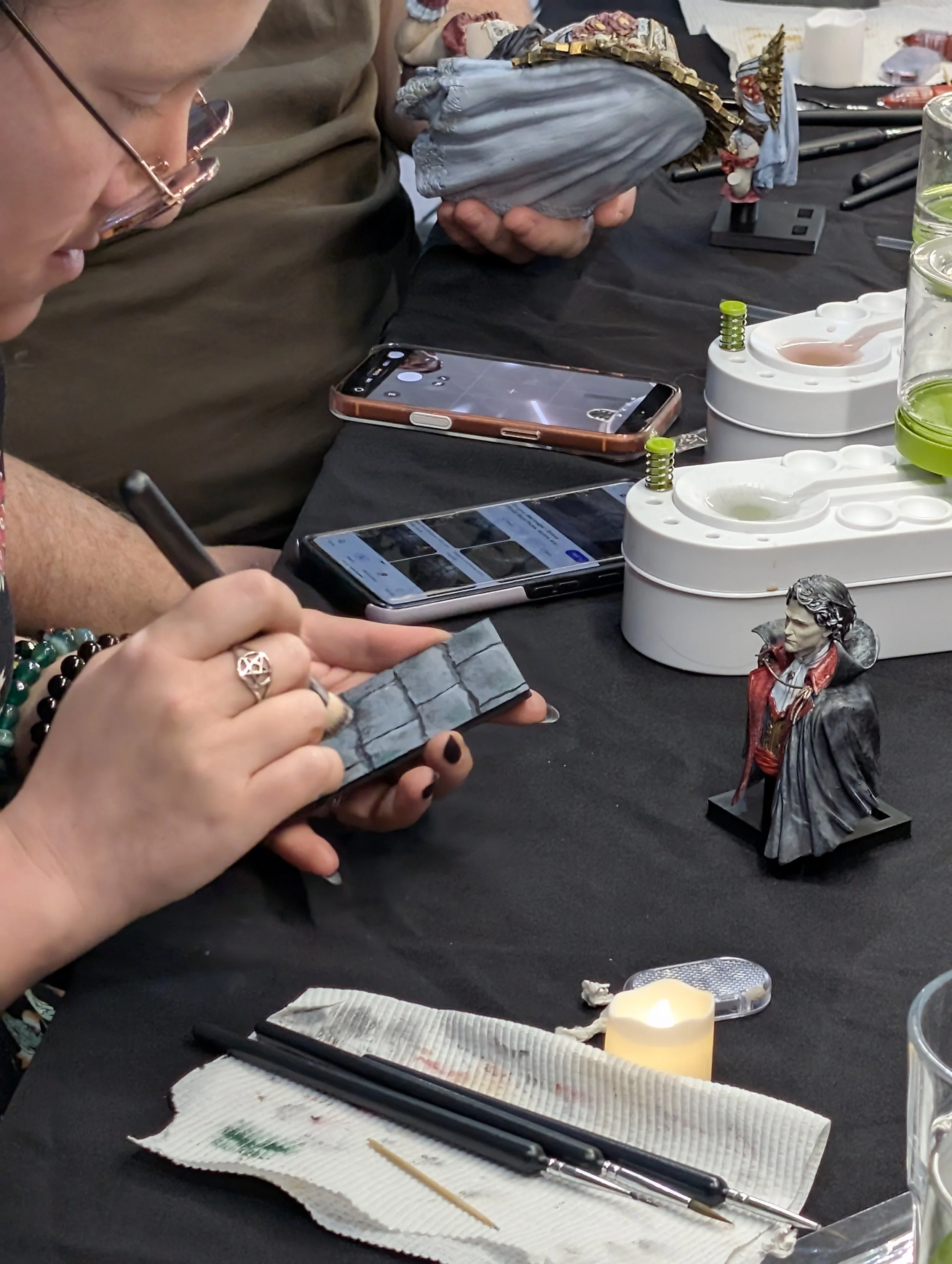
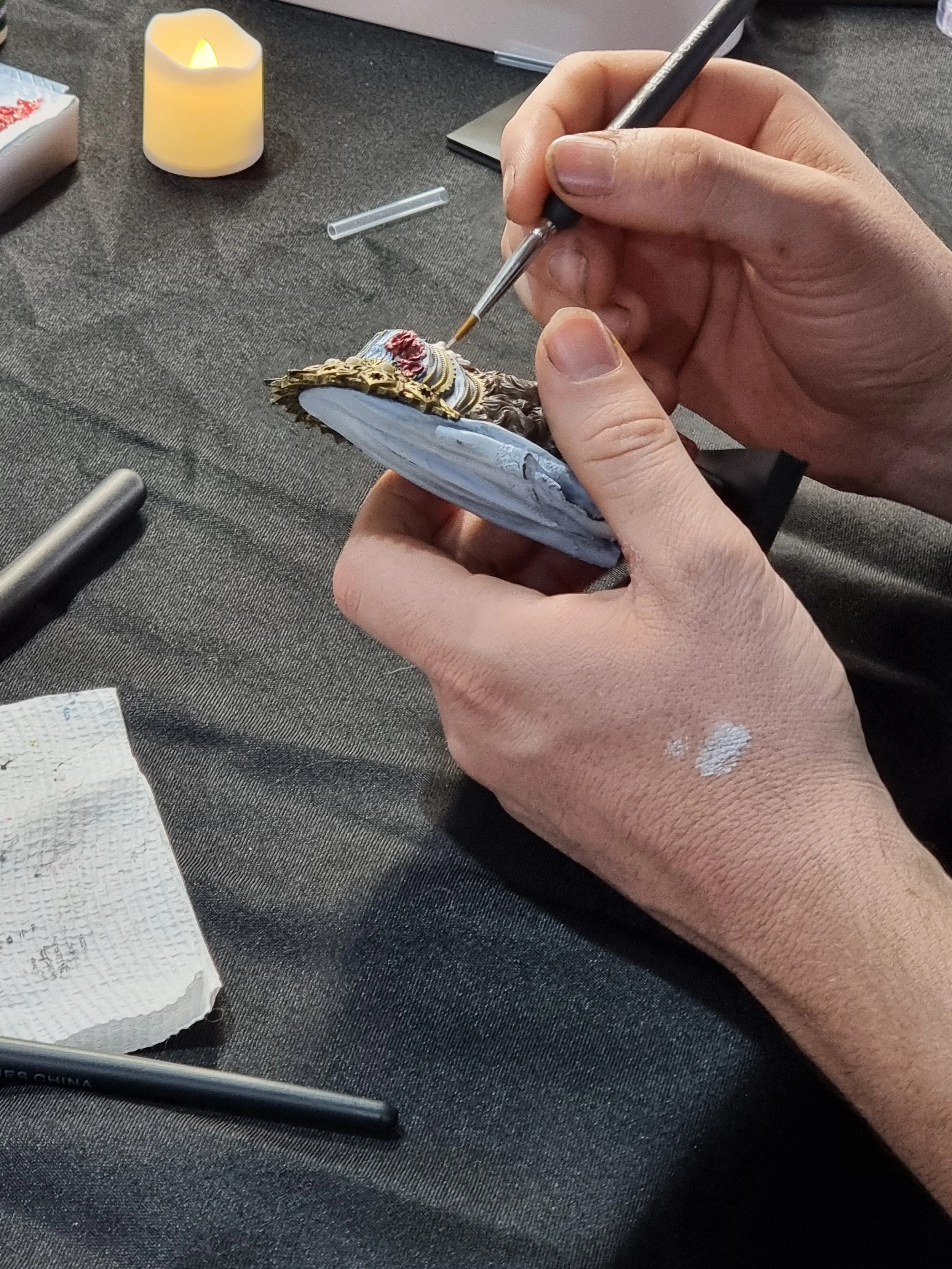
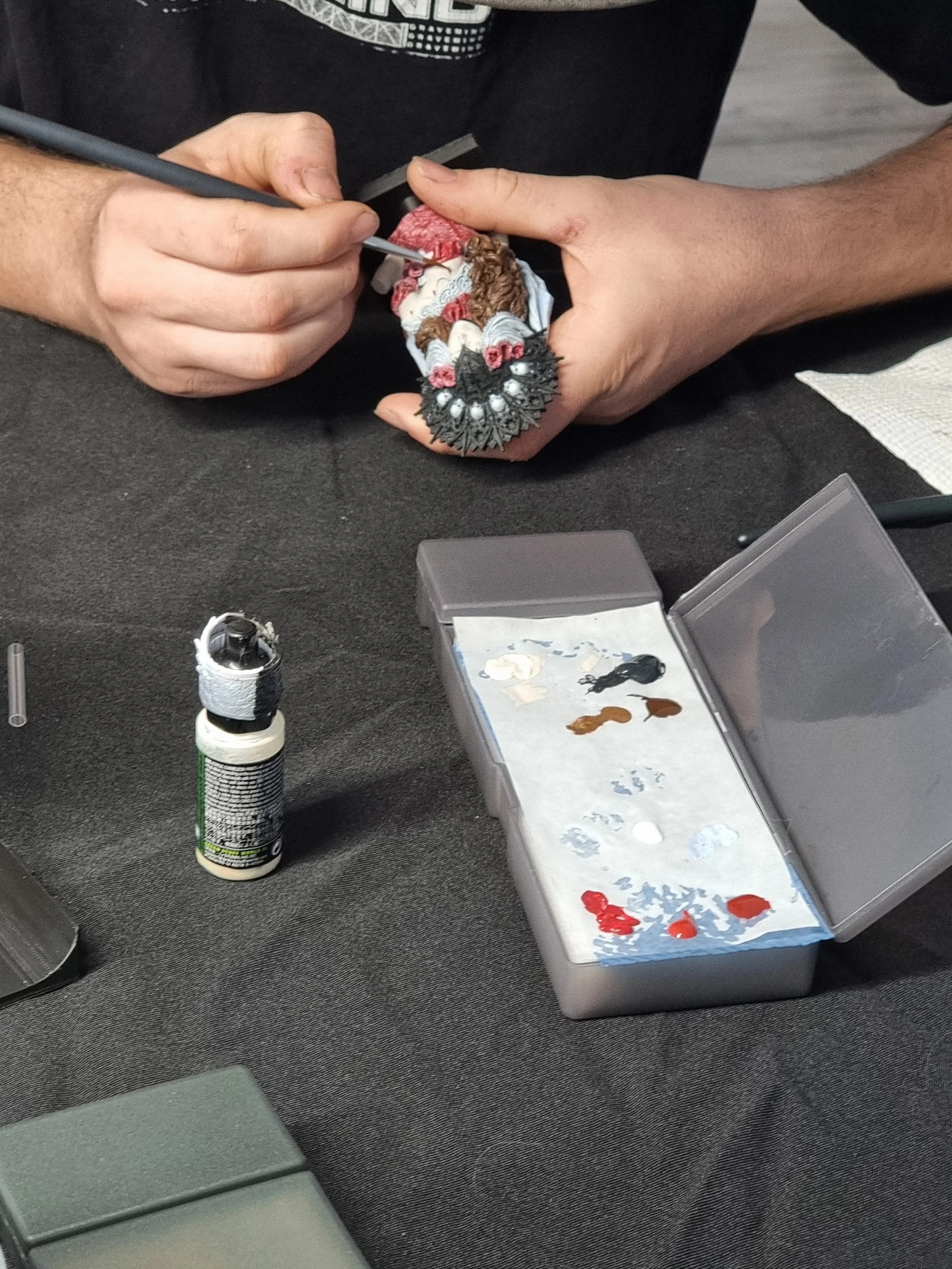
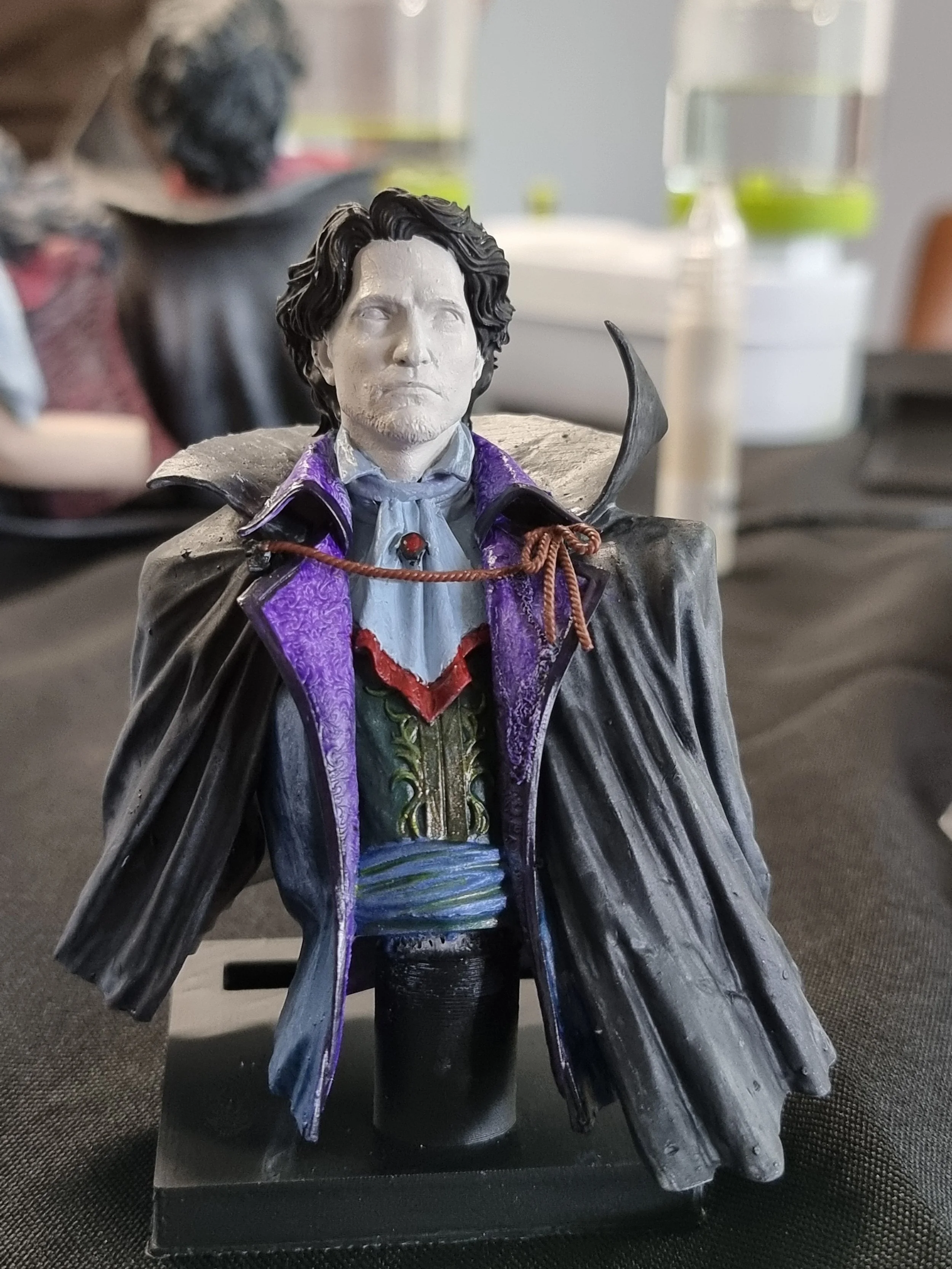
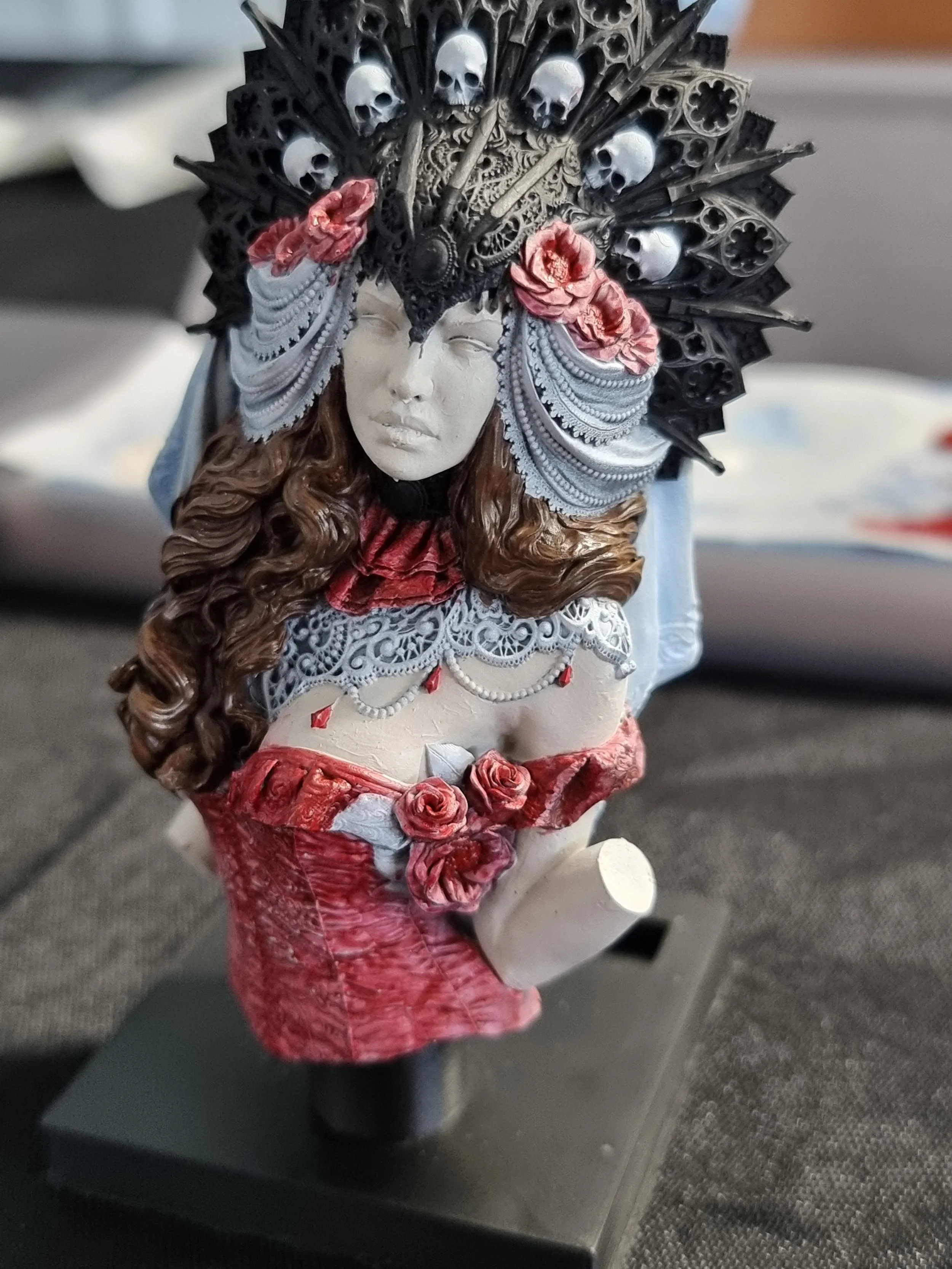
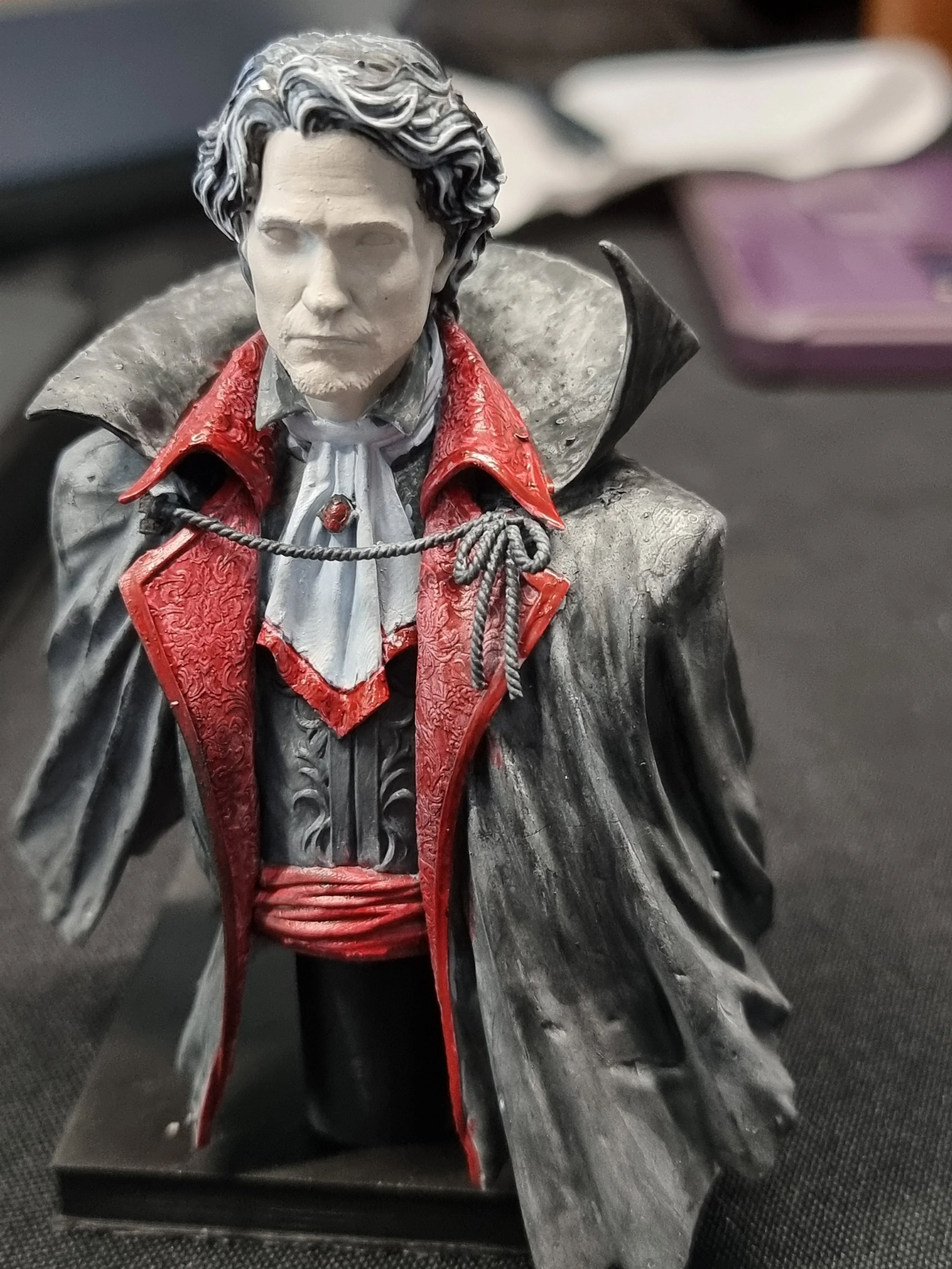
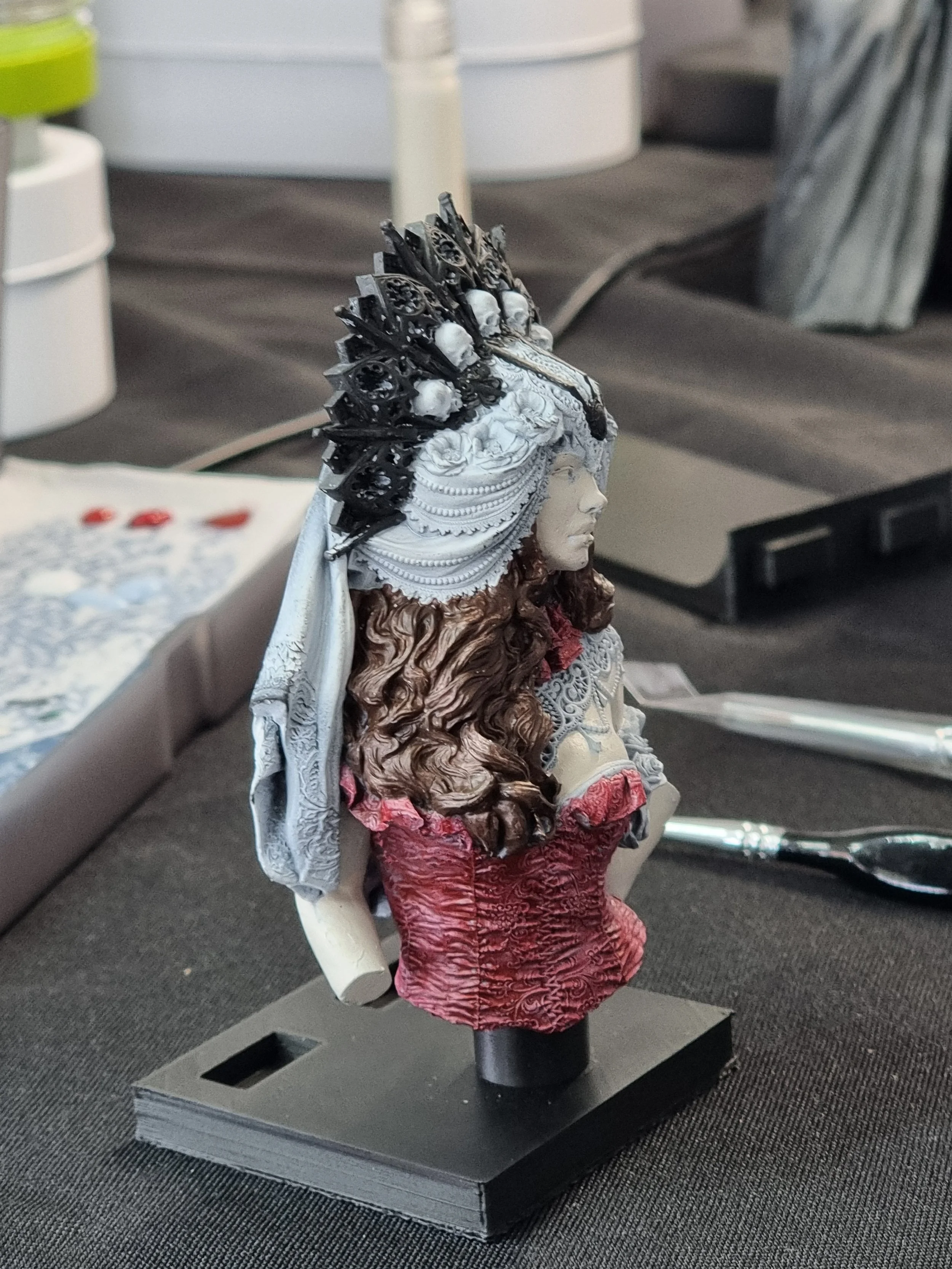
The bust is built the way the story was: a base, then shadow, then colour laid back over it, then the details that catch the light. Each stage of the painting is paired with a stage of the history, so the figure in your hands and the record behind it develop together.
| Stage | What you're doing | Historical reference |
|---|---|---|
| 01Base colours | Establish skin, clothing, hair and accessories. | Origins. Who were Vlad III and Erzsébet Báthory before their legends? Family, upbringing, status and political circumstances — including that Dracula's father was Vlad II Dracul. |
| 02Washes and shadows | Introduce depth into recesses, folds and facial details. | The darker history. Vlad's warfare, executions and impalements; the accusations of cruelty, torture and murder surrounding Báthory. What contemporary records actually describe. |
| 03Layering | Rebuild midtones and strengthen colour after shading. | Layers of reputation. How stories accumulated around them: German-language accounts and printed propaganda concerning Vlad; witness testimony, rumour and later retellings concerning Báthory. |
| 04Highlights | Bring forward raised details and areas catching light. | What the evidence illuminates. Where history and legend overlap or diverge — Vlad's documented violence against exaggerated numbers; Báthory's investigation against the later blood-bathing mythology. What can we establish, and what remains uncertain? |
| 05Finishing details | Eyes, metallics, decorative details and final corrections. | Your legend. How Vlad became associated with the fictional Count Dracula, and how Erzsébet became the Blood Countess. Participants decide whether their finished bust represents the historical person, the legend, or their own interpretation. |
Every historical claim made in the room is drawn from the sources listed at the foot of this page — including the ones that correct the legend.
Sources and further reading
Reviewed 30 October 2026
Vlad III
- Dénes Harai, "Counting the Stakes: A Reassessment of Vlad III Dracula's Practice of Collective Impalements in Fifteenth-Century South-eastern Europe", Transactions of the Royal Historical Society (2025). Open access. doi.org/10.1017/S008044012510042X
- Alice Isabella Sullivan, "Portrait of Vlad III Dracula (Ambras Portrait)", Smarthistory, 30 January 2024. smarthistory.org
- Bram Stoker Estate, "What inspired Dracula" (accessed 30 October 2026). bramstokerestate.com
- National Geographic, "Vlad the Impaler's thirst for blood was an inspiration for Count Dracula" (2021). nationalgeographic.com
Erzsébet Báthory
- H. Németh István, "Báthory Erzsébet és bűnpere", Magyar Nemzeti Levéltár [Hungarian National Archives], 2016. mnl.gov.hu
- Nádasdy Ferenc Múzeum, "Báthory Erzsébet", Sárvár. nadasdymuzeum.hu
- Gábor Várkonyi, "A sárkány árnyékában" [In the shadow of the dragon], Korunk 2012/3, 35–40 (in Hungarian; English abstract). ceeol.com
- Rachael Leigh Bledsaw, "No Blood in the Water: the Legal and Gender Conspiracies against Countess Elizabeth Bathory in Historical Context", MS thesis, Illinois State University, 2014. ir.library.illinoisstate.edu
- Shelley Puhak, The Blood Countess: Murder, Betrayal, and the Making of a Monster, Bloomsbury, 2026.
Painting Class Gallery