Beyond Thresholds - Week 1
The Checkpoint
Week 1: 05/08/2026 – 10/08/2026
We are officially on the clock for Collector Con this September. [Thresholds] is a nine-piece physical Cabinet of Curiosities, inspired structurally by Guillermo del Toro's Cabinet of Curiosities (Netflix). Each curiosity is a trigger — it makes someone ask a question, and then gives them somewhere meaningful to go. In five days we designed the cabinet framework, created the media assets and preview video, printed two physical prototypes, confirmed two embroidery directions, and began the research threads that will define the remaining slots.
The Human Element
Five days. Two physical prototypes printed, a cabinet designed, media assets cut, and four research territories opened. The pace is not the problem. The problem is knowing when to stop opening new threads and start closing them.
Memento Mori prototype: The first curiosity off the printer. Memento Mori — Latin for "remember that you will die" — is the Victorian tradition of commemorating the dead through objects. Hair jewellery, mourning lockets, death masks, pressed botanicals, keepsakes made from the physical remnants of a person. The Victorian relationship with death was intimate and material in a way that contemporary culture has largely abandoned. The curiosity asks: how did an entire culture develop a visual and material language for grief, and what does it say about us that we find it unsettling now? The prototype is the starting point for a physical object that will carry that question.
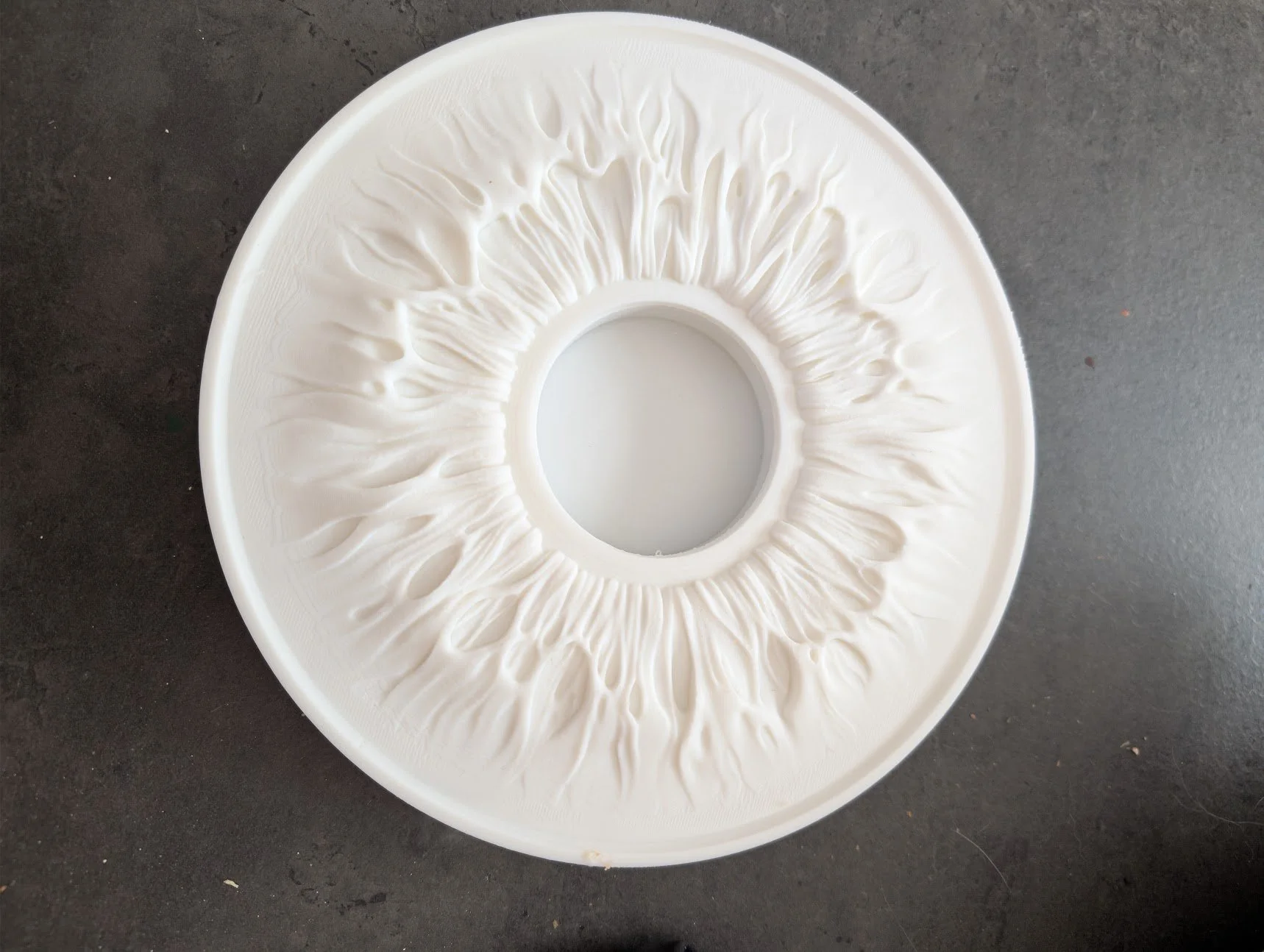
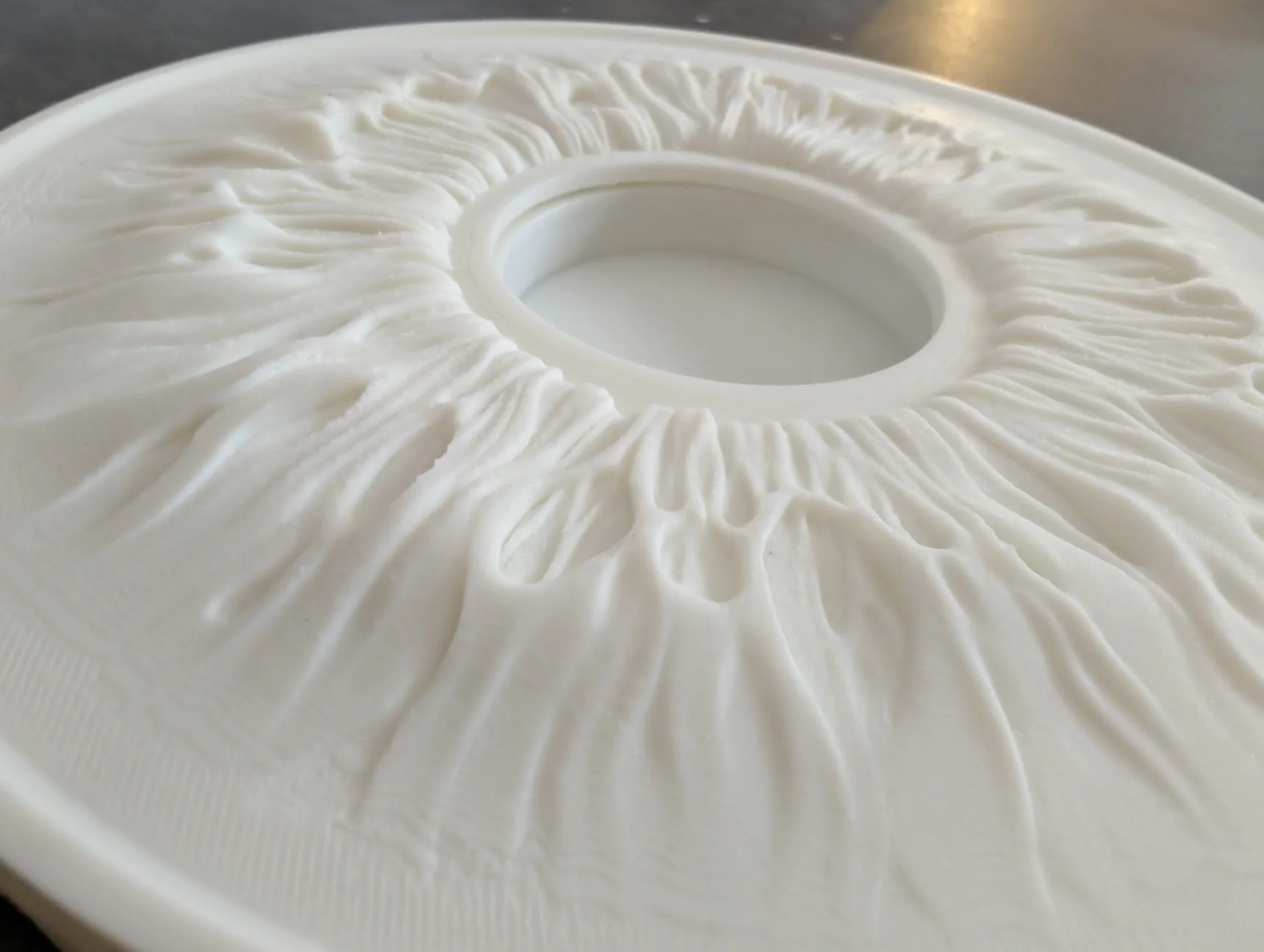
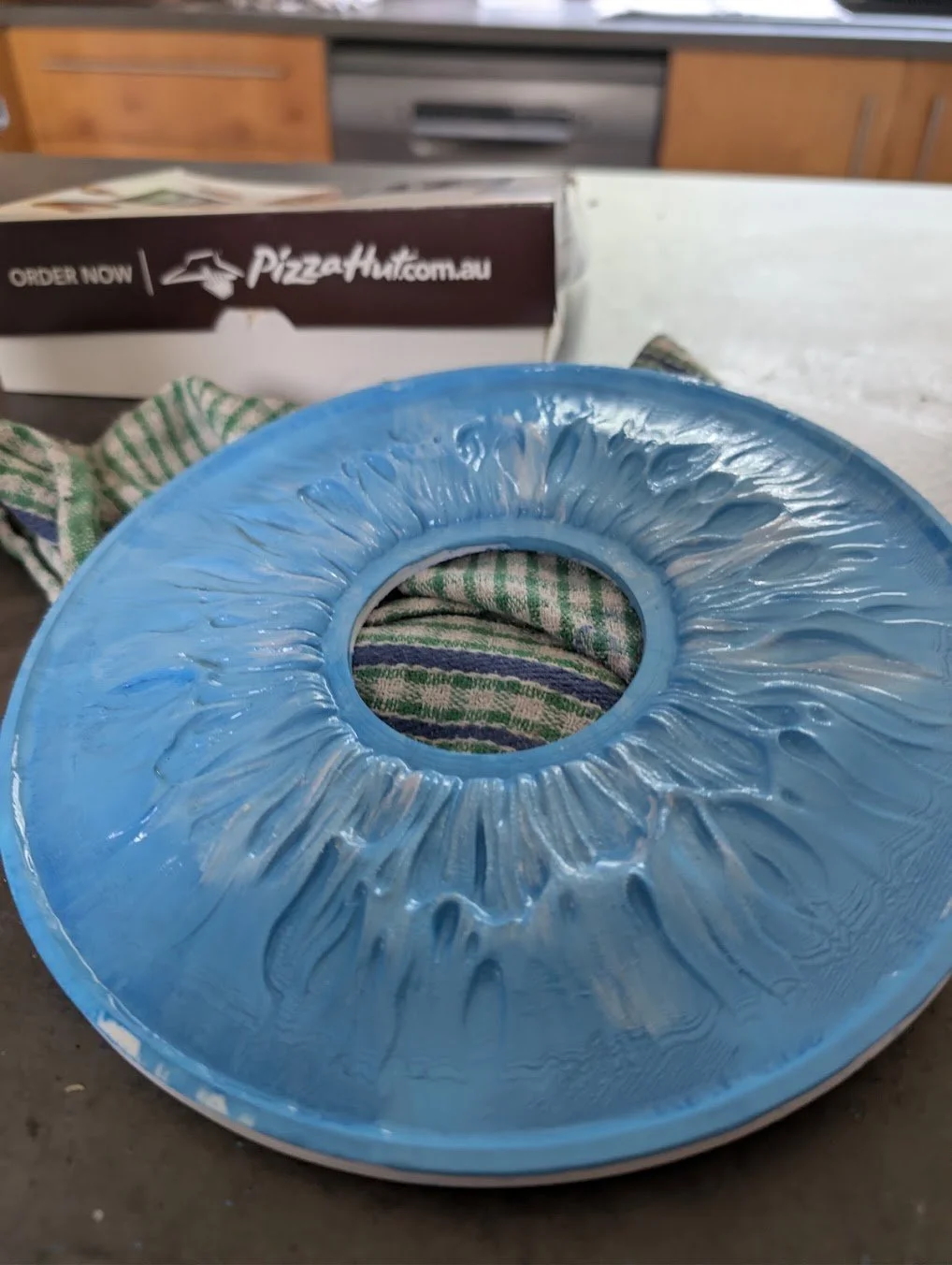
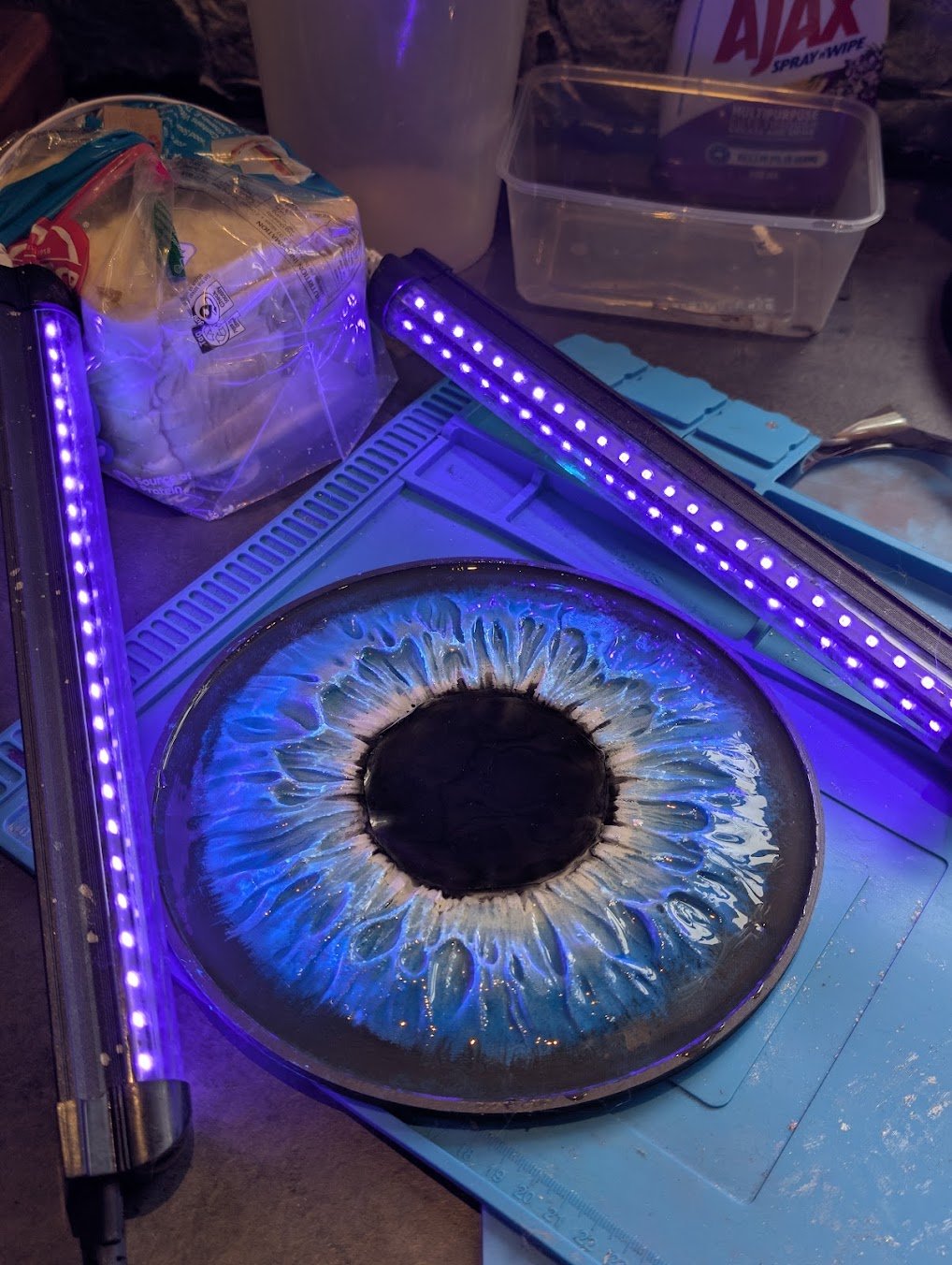
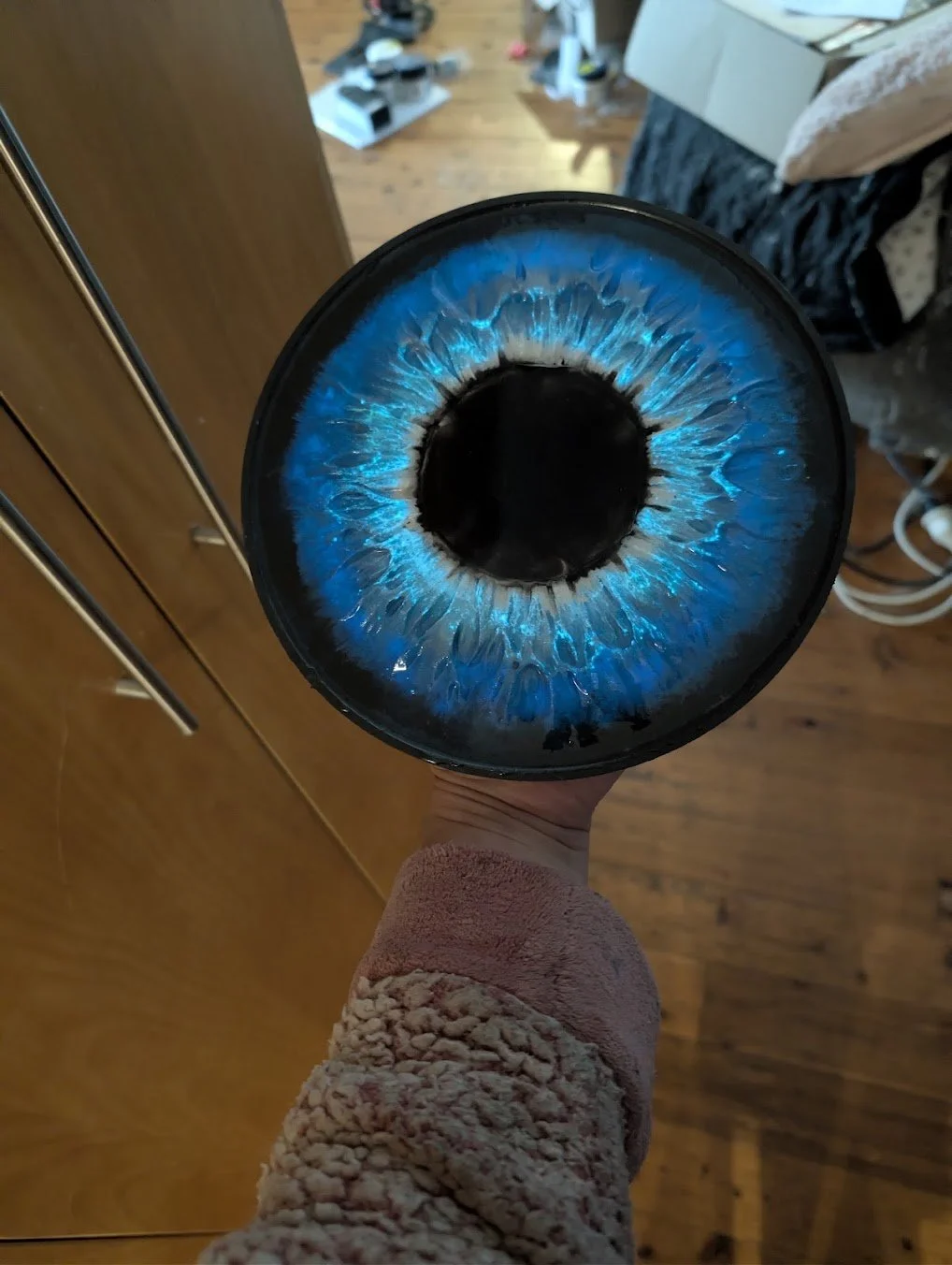
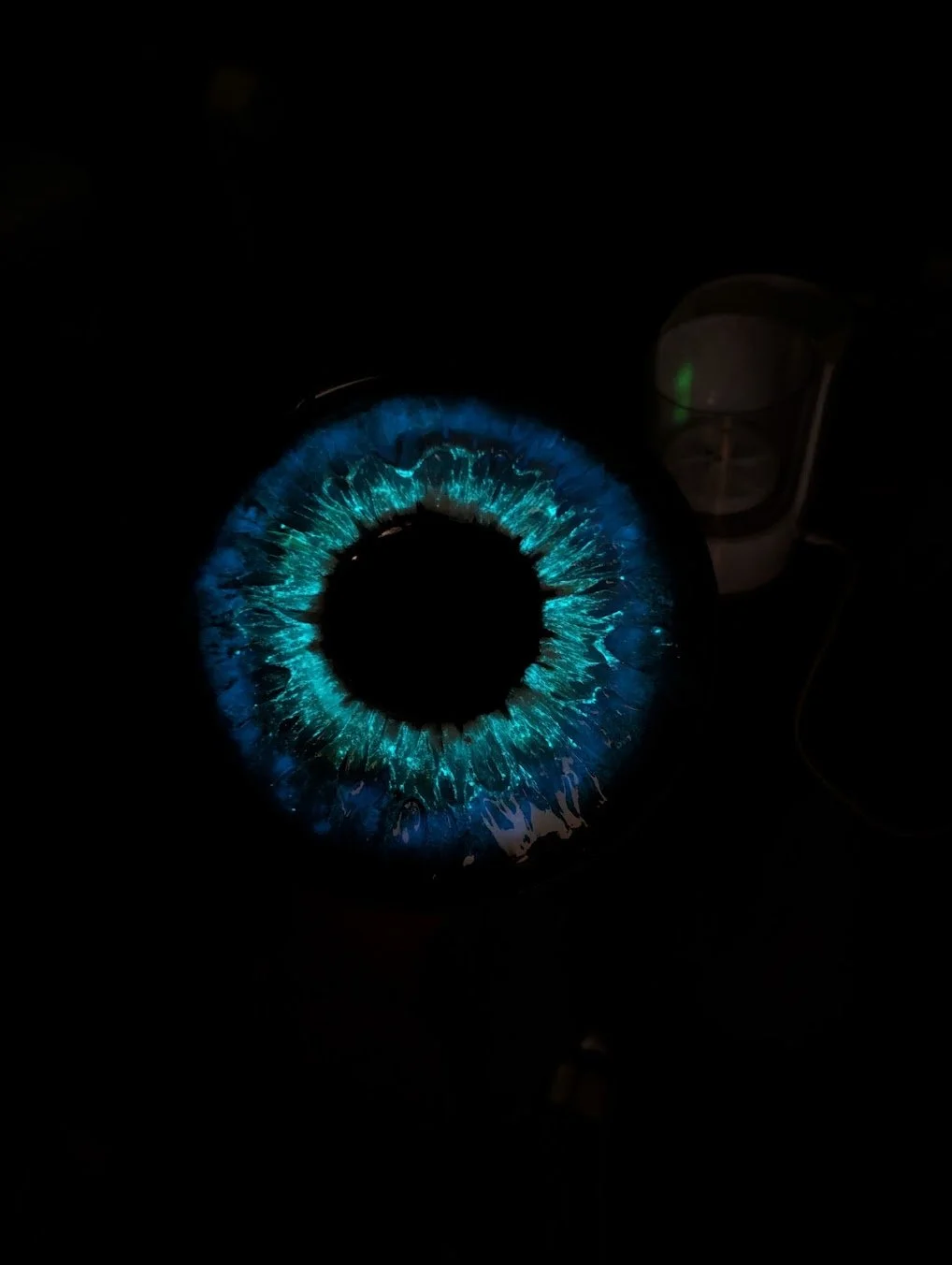
Evil Eye prototype: The second curiosity off the printer, in FDM. The print produced a lightning-like support and infill artefact — technically a quirk of the process, but visually striking enough under night lighting that we are discussing retaining it rather than treating it as a defect. A resin version is also queued as a parallel route.
Embroidery — waiting on supplies: Two embroidery directions are confirmed. Blackwork embroidery (a technique with roots in Moorish Spain, brought to England in the Tudor period) and Romanian traditional embroidery, which carries its own distinct regional visual language. Both will become bookmarks — physical take-home objects with NFC chips linking to the sourced educational pages. Supplies are on order; execution is pending.
The AI Collaboration
The analytical work this week came from two directions simultaneously. ChatGPT produced a structured reference pull on the state of the project — mapping the cabinet design logic, the confirmed curiosity directions, and the research territories still open. Manus worked on the conceptual framing and the documentation structure.
The most significant output came from the Cabinet of Curiosities watch analysis. Rather than watching the show for aesthetic inspiration, we tracked recurring objects, colours, language, and narrative mechanisms across five episodes: Lot 36, Graveyard Rats, The Autopsy, The Outside, and Pickman's Model. The pattern that emerged was not what we expected.
Blindness kept appearing — literal at first (blind creatures in Graveyard Rats, the alien losing sight during transfer in The Autopsy), then metaphorical. The grave robber in Lot 36 knows how the dead should be treated and continues anyway. The alien in The Autopsy possesses extraordinary knowledge of human physiology and is still outmanoeuvred. Pickman's Model is built around a protagonist who professionally evaluates and interprets art while repeatedly failing to understand what he is actually seeing. The series keeps returning to the same axis:
Sight → Knowledge → Understanding. They are not interchangeable.
That produced our working hypothesis for the display: The threshold may not be where the unknown begins. It may be where what you thought you knew stops being sufficient.
The Focus Artefacts
The Watching Eye (Nazar)
The curiosity we have developed furthest physically. The design evolved from a generic evil eye object into a question: Why do humans across cultures create things that watch back? The evil eye belief — that envy or excessive admiration can cause harm through the gaze — appears across the Mediterranean, the Middle East, the Balkans, Central and South Asia, and parts of Southern Europe. The Turkish nazar boncuğu is the most commercially recognisable form, but the belief predates the blue glass bead by centuries.
The physical object is a liquid-motion eye: clear resin sclera, black pupil, and an iris functioning as a sealed chamber filled with black galaxy-style fluid, mica shimmer, and glow-in-the-dark blues. Fill access is hidden through the pupil. The iris subtly shifts with movement. We deliberately stepped away from complex optical arrangements in favour of something that creates a psychological effect rather than a mechanical one. The object does not accuse the viewer. It simply notices them noticing it.
The prototype build in progress:
Memento Mori
The Victorian tradition of mourning objects is one of the most misunderstood areas of material culture. What contemporary audiences often read as morbid was, in its time, an act of profound intimacy. Hair work — braided, woven, or set into jewellery — was a way of keeping a physical part of a person present after death. Death masks were made not for spectacle but for remembrance. Mourning dress followed strict codes that communicated grief publicly and gave it a social structure. The curiosity will explore how an entire culture developed a material language for loss, and why that language became taboo within a few generations. The prototype is the physical anchor for that question.
The Dragon Head
Confirmed direction: a dragon head mount with mist or a humidifier running through the mouth. The educational layer is comparative visual language — the curiosity is not about dragons being cool, but about the fact that "dragon" is not one universal visual object. Western European dragons (winged, fire-breathing, adversarial) and East Asian dragons (serpentine, associated with water and wisdom, often benevolent) are built from entirely different symbolic systems. The research thread will map dragons in art history across both traditions, tracing how the visual language was constructed and what it encodes about each culture's relationship with power, nature, and the unknown. The plaques alongside the mount will teach someone to read those differences.
Embroidery Bookmarks
Two confirmed directions, both waiting on supplies. Blackwork is a counted-thread embroidery technique using black silk on white linen, with origins in Moorish Spain and a strong presence in Tudor England — it appears in Holbein portraits and was associated with wealth and status before becoming more widely practised. Romanian traditional embroidery carries distinct regional motifs with documented symbolic meaning, varying by village and occasion. Both will become physical bookmarks with NFC chips. The tap links to a sourced educational page; the object itself is the reason to tap.
Check out our current research on Blackwork embroidery!
The Cabinet: Design Language
The cabinet is not display furniture. It is part of the exhibition.
We are repurposing an existing IKEA cupboard rather than building from scratch — the constraint is time and budget, not ambition. The approach is to substantially alter the silhouette through applied architectural details: bun feet, tracery panels, corbels, and relief mouldings. The visual language draws on Victorian, Gothic, and Baroque traditions, with Rococo as a reference point for surface ornamentation. The goal is not to copy a single historical style but to build something that reads as belonging to the tradition of the curiosity cabinet — a piece of furniture that implies a world of collected, categorised, and annotated objects.
Internally, SKÅDIS pegboard provides the hidden modular structure. The nine curiosities can be repositioned, swapped, or changed without rebuilding the cabinet. Lighting and atmosphere are handled at the cabinet level rather than forcing electronics into each individual object.
The motifs applied to the exterior are not decorative in the generic sense. We are working from the principle established in the Māori design research: motifs carry meaning, and meaning should be grounded in the cultural context of the object it decorates. Where a motif appears on the cabinet, it will be there for a reason.
The Horizon
•Resin tests for the liquid-motion Eye chamber — confirm the fluid, mica, and glow-in-the-dark combination.
•Continue the Cabinet of Curiosities watch analysis through the remaining three episodes.
•Begin art history research on dragons: Western European vs East Asian visual language.
•Embroidery supplies arrive — begin Blackwork and Romanian bookmark samples.
•Start applying the first architectural details to the IKEA cabinet shell.